Category Archives: Users

EC will be reduced pesticides by 2030 to protect bees and biodiversity

EC will be reduced pesticides by 2030 to protect bees and biodiversity

The European Commission (EC) aims to halve the use of pesticides by 2030 with the goal of halting the decline of pollinators, in a plan that is likely to draw criticism from both those demanding the removal of the substances and farmers who say they crops yields will suffer.

With this, the EC wants to commit agricultural production in the European Union to halve the use of “high risk” chemical pesticides by 2030, according to a draft that appears to be published on May 20.

Because the EC declines to comment on unpublished drafts, which are working documents and are subject to change until adopted, it did not explain what high risk meant or how it would impose the reduction.

Indeed, according to the European Food Safety Authority, the drop in the number of bees and loss of colonies in the last 15 years; a trend endangers 76% of food production in Europe that depending on pollination.

Figure 1. Delivery of the letter to the EC requesting the reduction of pesticides. Source: www.savebeesandfarmers.eu

Figure 1. Delivery of the letter to the EC requesting the reduction of pesticides. Source: www.savebeesandfarmers.eu

According to several research, since mid-20 century an intensive agricultural practice has driven of biodiversity loss and wild bee decline (Cole, et al., 2019) in olive groves (Campos et al., 2017) vineyards (Kratschmer et al., 2019), grasslands (Ekross, et al., 2019), melons orchards (Hamblin, et al., 2018) and so on.

It seems that the effort made by some civil society organizations, such as the drafting of a joint letter that they sent to the EC to gradually reduce pesticides, has caused a positive effect.

However, some farmer groups have said that a broad ban on pesticides could cause falling crop yields, and urged the Commission to assess the impact of the measures before setting binding targets.

Do you think the measure that will be approved by the European Commission is positive? (Please, write your opinion in the comments.)


References

Campos, M., Alche, J.D., Porcel, M., Paredes, M., Alcalá, R., Fernández, M.L. 2017. Comunidad de abejas asociadas a las cubiertas vegetales del olivar. Revista de Fruticultura
Cole, L. J., Kleijn, D., Dicks, L. V., Stout, J. C., Potts, S. G., Albrecht, M., … Scheper, J. (2020). A critical analysis of the potential for EU Common Agricultural Policy measures to support wild pollinators on farmland. Journal of Applied Ecology. doi:10.1111/1365-2664.13572
Hamblin, J., Barbetti, M. J., Stefanova, K., Blakeway, F., Clements, J., Cowling, W., … Nichols, P. (2018). Crop breeding to break nexus between bee decline/food production? Global Food Security, 19, 56–63. doi:10.1016/j.gfs.2018.09.003 
Kratschmer, Sophie; Pachinger, Bärbel; Schwantzer, Martina; Paredes, Daniel; Guzmán, Gema; Goméz, José A.; Entrenas, José A.; Guernion, Muriel; Burel, Françoise; Nicolai, Annegret; Fertil, Albin; Popescu, Daniela; Macavei, Laura; Hoble, Adela; Bunea, Claudiu; Kriechbaum, Monika; Zaller, Johann G.; Winter, Silvia. 2019. Effects of vineyard inter-row management intensity and landscape diversity on wild bee diversity, abundance and functional traits across Europe. Geophysical Research Abstracts . 2019, Vol. 21, p1-1. 1p.
kroos, J., Kleijn, D., Batáry, P., Albrecht, M., Báldi, A., Blüthgen, N., … Smith, H. G. (2020). High land-use intensity in grasslands constrains wild bee species richness in Europe. Biological Conservation, 241, 108255. doi:10.1016/j.biocon.2019.108255
Guidelines for Community of Practice

D 5.1 Guidelines for Community of Practice (CoP)

Now, you can check the Deliverable 5.1 on the CONSOLE website. (Document pending the approval of the European Commission)

Deliverable D 5.1 is titled “Guidelines for Community of Practice (CoP) management at local level” The Community of Practice (CoP) is foreseen to play a key role in boosting innovation in the effective and long-lasting delivery of Agri-Environmental-Climate Public Goods (AECPGs).

The CONSOLE CoP will be organized around practitioners experienced in the provision of AECPGs and those interested in it and will be nourished throughout the project lifetime.

The CoP is defined as a Group of People (the Community) who share a common interest and who learn how to perform better through regular interaction and exchange of experiences.

So, the idea is to set up a pan-European CoP with national and/or local (regional) sub-groups managed by the CONSOLE partners with the aim of developing improved and novel contract solutions in collaboration with its members.

This document sets out:

  1.  the purpose and objectives of the CoP in CONSOLE,
  2.  the setting up and management of the CoP at European, national and local level,
  3.  the process for motivating individuals to participate.

You can download the Deliverable by clicking the following button.


EFFECT project

Sisters projects: EFFECT

One of the objectives of the CONSOLE project is to publicize and establish relationships with all those projects that have the same field of work.

Among these sister projects, we cannot forget the EFFECT project, whose main objective is to reconcile the private benefits of farmers from agriculture and public environmental and climatic goods.

Desing

The project is made up of 7 work packages (WPs), in which involve specific competences, but closely connected and equally essential to achieve our objectives.

Consortium

The EFFECT project is formed by 19 partners from different countries, as well as from different fields of specialization, but with a balanced set of skills.

Effect project partners
EFFECT project Partners

Academic and professional organizations participate, which have an ideal team to achieve the objectives and problems established by the project.

TheIf you want to know more, you can visit the website

EUREKA project

EUREKA

Today’s publication related to CONSOLE‘s sister project is aimed at raising awareness of the EUREKA project.

The main objective of the EUREKA project (https://h2020eureka.eu/) is to strengthen the EU agricultural knowledge base by co-creating the ‘network to connect all multi-stakeholder H2020 projects’, to explore the feasibility of creating a modular database of useful results.

EUREKA project partners

EUREKA project partners

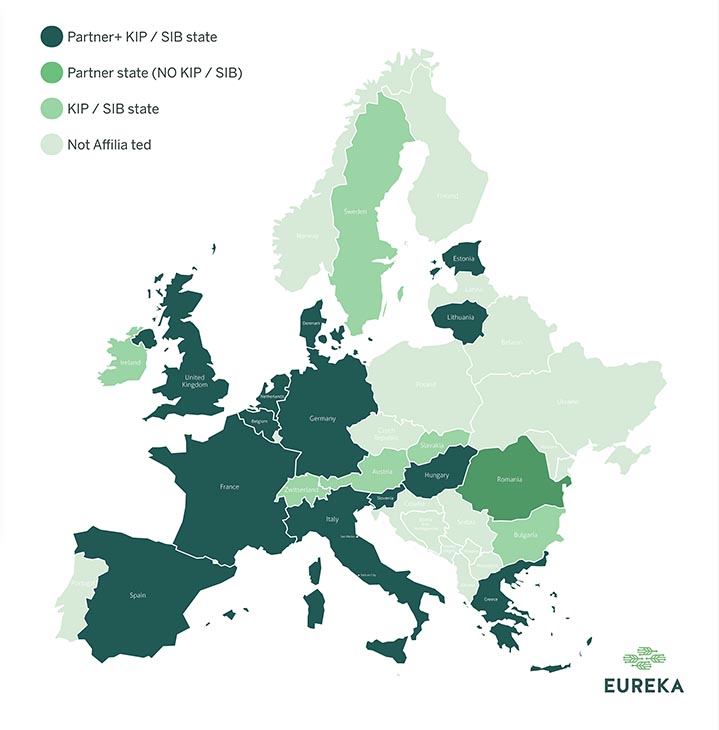
This project started in January 2020, and is made up of 21 partners from 15 states in Europe who will develop an open source electronic platform called FarmBook.

FarmBook focuses on the specific needs of stakeholders and seeks to improve the exchange between different user groups (project partners and farmers, consultants, scientists, decision makers). Best practices for joint creation and knowledge transfer of current research projects will be used to improve future ones.


H2020 EUREKA Project Presentation
CONSOLE project and the provision of public goods

CONSOLE project and the provision of public goods

The CONSOLE project focuses on promoting agriculture and forestry delivery of public Agri-Environmental-Climate Goods (hereafter AECPG) through the development of improved contractual solutions.

The difficulty in the provision of public goods relates to the main challenges, such as trade-offs between environmental performance and farm profitability, time lag between action and impact, and potential mismatch between scales of action and its effects.

Agricultural policy in the European Union (EU) has partially reoriented its objective towards the provision of public goods in rural areas, recognizing current social demands. Also, the legislative proposal for the next CAP programming period envisages following this path.

CONSOLE project and the provision of public goods

CONSOLE project and the provision of public goods

However, the actions aimed at the delivery of AECPG are still considered unsatisfactory in terms of longevity, effectiveness and efficiency.

Improvements may come from a flexible combination of promising new instruments, such as land tenure systems, results-based payments or collective approaches, as well as better value chain strategies, but have so far been tried badly in practice in the EU.

An effective implementation of these solutions requires a consistent multi-level contractual framework that takes into account the surrounding context variables, such as the union with market goods, price systems, business networks, social capital, the experience of farmers and EU / national / local framework legislation.

Also, it must take into account the social, organizational and technological innovation processes, as well as the local specificities of the desired results. Finally, feasibility may depend on broader implications of different approaches, e.g. green box compliance and budget constraints.

As a comprehensive, innovative and collaborative approach is needed to ensure a systematic update of the provision of AECPG in Europe, CONSOLE boost its innovation in the durable delivery of AECPG by EU agriculture and forestry, by creating a Community of Practice (CoP), designing and testing effective and efficient cooperation models and developing a contractual framework to support the implementation by multiple actors.

The main expected output of the CONSOLE project is a framework to better design and implement AECPG contracts, built in conjunction with a ready CoP capable of applying the framework in a real-life context.

The importance of Agri-Environment Schemes

The importance of Agri-Environment Schemes

Several pressures as population growth, industrial activities and the increase of intensive agriculture from the twentieth century have considerably increased agricultural yields (Smil, 1999). These increases cause loss of habitat and species, soil threats, increase of gas emissions and further deforestation (FAO, 2017.)

Environmental and ecological goods (Agro-Environmental Goods) and services are the profits that humans obtain, directly or indirectly, from the healthy functioning of environmental and ecological systems. The promotion of them will allow crop production more sustainability and ecological viability.

In this context, during agricultural food production, farmers work the land and resources to produce products sustainably. To achieve this, farmers depend on ecological assets, including clean soil and water.

Under environmentally ideal conditions, it is allowed to grow marketable agricultural products, while farmers have the opportunity to manage ecological services. Such as the water cycle (purification, retention, flood mitigation), air quality (oxygen production, carbon sequestration, climate regulation), nutrient cycle, pollination services, provision of habitat and biodiversity for wildlife, control of soil erosion, etc.

Farmers have the opportunity to manage their plots as a public good while practicing good farmland management, but these efforts are seldom taken in the price farmers receive for their produce.

The importance of Agri-Environment Schemes (AES)

The importance of Agri-Environment Schemes (AES)

The role of the European Union

The European Economic Community (EEC), as noted by Batáry et al. (2015), already created mechanisms in 1985 to compensate farmers for the loss of income associated with less intensive land management (Regulation 797/85 of the European Union [EU]). But from 1992, the European Union has driven the efforts to reduce pressure on the environment and promote (EU Regulation 2078/92) Agri-Environmental Schemes (AES; Batáry et al., 2015; European Union, 2017).

Ultimately, the main objectives of the AES include reducing toxic emissions and pesticides, protecting biodiversity, restoring landscapes and preventing rural depopulation (Kleijn and Sutherland 2003).

It is widely accepted for all actors (policy makers, stakeholders, rural population, …) that conservation programs must take into account the inherent heterogeneity of the interaction between crop production and environmental outcomes (Wu & Babcock, 1996).

Obviously, it must be taken into account that the production function and the environmental parameters vary according to the crop and the area due to the variability of the climate and the characteristics of the land.

The European Commission offers technical and also financial support to Member States to design and implement these ESAs. Likewise, each measure has a specific environmental objective, such as: the protection or improvement of biodiversity, soil, water, landscape or air quality, or mitigation or adaptation to climate change. Many actions are multifunctional and are designed to provide simultaneous benefits for various environmental objectives. Each measure also involves paying those farmers who choose to adopt specific environmental management practices on their farms.

Types of AES

According to Kleijn and Sutherland (2003) AES can be classified into horizontal or zonal. Horizontal schemes generally harmonize the protection of the environment with the objectives of nature conservation and can be applied throughout the country. They are designed to easily adapt to crop field management systems. They are not overly demanding nor do they directly support the management that farmers are doing anyway, such as organic management

On the other hand, zonal schemes are directed to areas with high natural value. They generally require personalized management for the species or ecosystems, and farmers are often required to seek expert advice in developing management plans.

From the CONSOLE project we recommend downloading and reading the document entitled << Agro-environmental schemes: impacts on the agricultural environment >> where there are several successful examples of the application of AES.


References

  • European Union. 1997. Agri-environment schemes: impacts on the agricultural environment. European Commission.
  • FAO, 2017. The future of food and agriculture -Trends and challenges. Rome
  • Kleijn D, Sutherland WJ. 2003. How effective are European agri-environment schemes in conserving and promoting biodiversity? Journal of Applied Ecology. 40:947–969
  • Smil V. 1999. Detonator of the population explosion. Nature. 1999; 400:415
  • Wu, J., Babcock, B.A.1996. Contract Design for the Purchase of Environmental Goods from Agriculture. Amer. J. Agr. Econ. 78. 935 – 945