Category Archives: Users

Sister project

The importance of publicizing sister projects

From the beginning, one of the objectives that the CONSOLE project had from the beginning is to create a network that had the ability to connect related projects, thereby promoting the exchange of scientific information with the aim of helping to improve decisions of the different teams involved, such as those responsible for public administrations.

Therefore, it is about strengthening the capacity for the exploitation of academic results and the cooperation of the different entities, to improve the research environment. In addition, to build a strong collaboration in the medium and long term with research organizations and companies (public and private).
A section dedicated to sister projects

To do this, within the CONSOLE project website, a specific section has been created where – step by step – we report on all the sister projects that are currently being developed; or have ended, but may retain stakeholder interest.

A Digital Marketing Strategy

New technologies have allowed the possibility of developing communities that share objectives. In the case of the CONSOLE project, we have used the most recent Digital Marketing strategies both in the development of the website and in Social Networks, regularly creating quality content that allows information exchange and collaboration.

Developing quality content – related to the activity – is essential in any promotion strategy, since it allows increasing the number of users (organic reach) and achieving the objectives of the project’s dissemination and communication strategy.

Your project in CONSOLE

Every week we identify one of the sister projects related to CONSOLE. But, if you see that your project is not in our section, but should be included, do not forget to fill out the form.
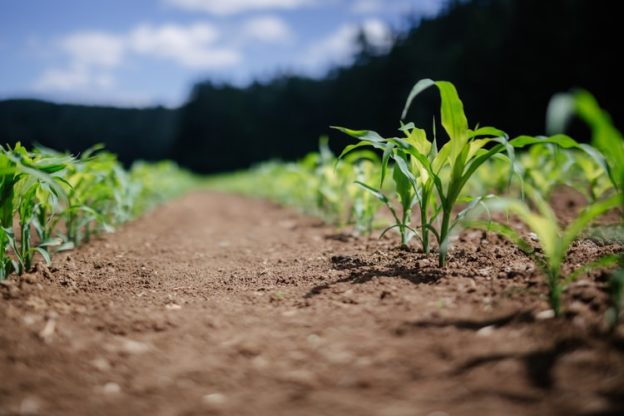
    EU and US agriculture managers face each other over the role of innovation in sustainable agriculture

    EU and US agriculture managers face each other over the role of innovation in sustainable agriculture

    It is clear that the objectives of the agricultural sector in the United States and in the European Union are disparate. The United States Secretary of Agriculture declared Europe’s plan to make agriculture more sustainable could stifle innovation, reduce agricultural production and put transatlantic trade at risk.

    However, the EU Commissioner says quality, Janusz Wojciechowski claims that quality is what counts.

    The United States bets on quantity

    Why indeed, the US Secretary of Agriculture, Sonny Perdue, criticized the EU’s “Farm to Fork” strategy and the continent’s reluctance to use new technologies in agriculture, in a heated debate on how to make the production of food to be more sustainable.

    Obviously, the US administration is concerned that farm-to-table and biodiversity strategies are extremely prohibitive for trade and jeopardize the sale of their products in Europe.

    We will not be on track to meet our food needs if we continue to impose policies that restrict growth and stifle innovation,” said Perdue.

    Our ambition is to be competitive in the world market, not in the quantity of food production, but in quality,” Wojciechowski replied.

    A dilemma for farmers

    There is no doubt that European farmers face an uncomfortable dilemma. To make operations more sustainable, they need to reduce the use of pesticides and fertilizers, while trying to increase yields so that the EU can become less dependent on food imports.

    In this sense, the United States favors the use of technologies such as gene editing and precision improvement, along with modern pesticides and fertilizers, which are promised, will be less harmful to the environment than previous products.

    However, and as you may have read in previous CONSOLE Blog entries, the European Commission has developed a farm-to-fork strategy that aims to reduce the use of fertilizers by 30 percent and deliver 25 percent of the land agricultural to organic agriculture. The next EU research program, Horizon Europe, will allocate money to projects focused on improving soil health and reducing the use of pesticides and antibiotics in agriculture by 2030.

    Better yields expected in EU barley

    Summer crops in many parts of Europe have benefited from well-distributed rainfall and relatively few periods of heat, according to the latest EU Crop Status Bulletin. However, extreme weather events in much of central Europe, southwest Finland and southern Russia had negative impacts, mainly on winter crops.

    Thanks to favorable weather, performance forecasts in several regions have been improved compared to estimates in the June bulletin. Highlight the case of spring barley. While in June a yield of 4.07 t / ha was expected, in July 4.33 t / ha (+ 6.4%) is expected, a figure that is also almost 8% higher than the average yield of the last 5 years.

    Better yields expected in EU barley

    However, the forecast for winter wheat was revised slightly downward. This was mainly due to strong downward revisions to the yield forecast in Romania, Bulgaria and Hungary associated with a very unfavorable campaign, worsened by heavy rains around ripening, which outweighed the slight upward revisions in most of the other countries.

    Better yields expected in EU barley


    For most other winter and summer crops, the balance was slightly positive. Yield forecasts for corn kernels and sunflowers remain well above the 5-year average, reflecting a sustained positive outlook in all major producing countries.

    Liverur

    LIVERUR

    Today, in the CONSOLE project we want to present another of the sister projects.

    The LIVERUR project pays special attention to Living Labs as they foster more sustainable resource mobilization, better cooperation between operators throughout the value chain, and lead to new services.

    Therefore, Living Lab uses the concept of open innovation in a broader sense, with a success / failure rate determined by empirically based key research factors.

    With empirically proven studies still lacking, LIVERUR’s short-term goal is to improve knowledge of business models growing in rural areas, including understanding their potential. In the long term, the project will increase the potential for rural economic diversification.

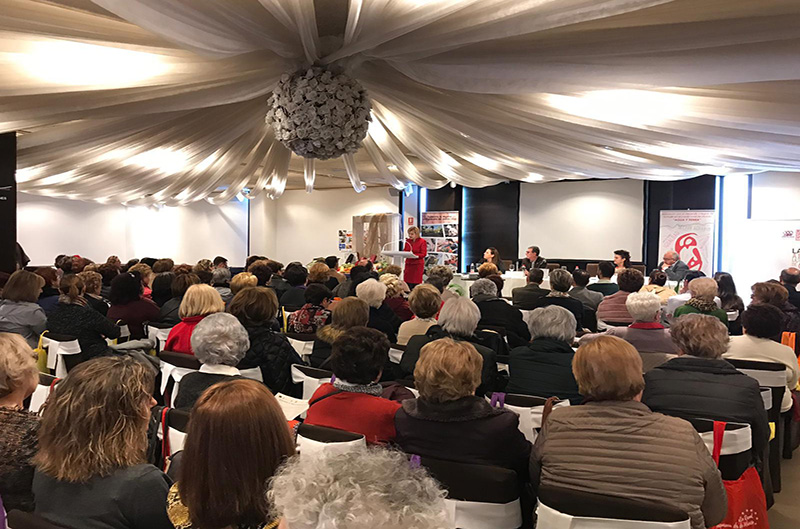
    LIVERUR project is presented at the ‘III Meeting of Rural Professional Women’

    LIVERUR project is presented at the ‘III Meeting of Rural Professional Women’

    Partners

    The project is developed by 24 entities from different countries of the European Union and led by the Catholic University of Murcia.


    Additional information

    And of course, you can get more information about LIVERUR by clicking on the button.

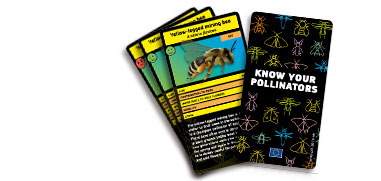
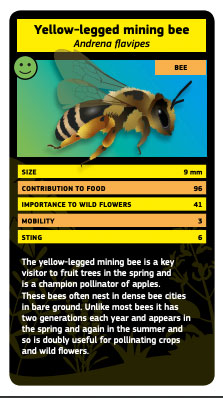
    Example of pollinators cards

    Know your pollinators

    From the CONSOLE project we want to congratulate the European Union in its effort to create activities such as “Meet your pollinators” It is an activity where, through the use of cards, the user (e.g. family) will get to know and become familiar with the main pollinators.

    Example of pollinators cards

    Example of pollinators cards

    We all know the role of pollinators in assisting plant reproduction. In Europe, pollinators are mainly insects, but we need the wind for cereal crops. Bees and flying flies are first on the list, but butterflies, moths, some beetles, and other flying insects are also important.
    There are thousands of different types of wild pollinators in Europe, all with important work to do. However, the number of wild pollinators is decreasing in Europe.

    A negative land management, as such, as  sprawling cities, pollution, pesticides, non-native species, and climate change is hurting these animals. Some species could become extinct.


    Therefore, we need to take care of all pollinators for a healthy environment for ourselves and the rest of nature.

    Above all, pollinators allow us to eat many of our favourite fruits, vegetables, and nuts. Approximately four out of five species of crop plants and wildflowers use animal pollination. Farmers depend on insects to produce many different types of crops that we need for a balanced diet.


    But we must understand that the environment also depends on pollinators. Thanks to them, wild plants can reproduce and provide fruits and seeds as food for other animals such as birds. Some wild plants have even evolved to function with only one or a few types of pollinator species. Without the right insects to help them reproduce, they will also disappear.

    The more pollinators we have, the more wildlife we ​​can have around us and the more our gardens and landscapes will flourish.

    Resource

    You can download the “Meet your pollinators” resource by clicking the button


    Main issues discussed at the meeting of EU Agriculture Ministers held yesterday

    The Ministers of Agriculture of the European Union held a meeting yesterday, July 21, in which the following topics were analyzed:

    The German Presidency outlined its work program and main priorities for the next six months in the agriculture and fisheries sectors, among which it stands out to adopt a general approach on the reform package of the Common Agricultural Policy (CAP) in October 2020 measure which was widely endorsed by the Council.

    Over the next six months, the presidency will also seek to reach conclusions on the farm-to-table strategy, as well as on animal welfare and food labeling.

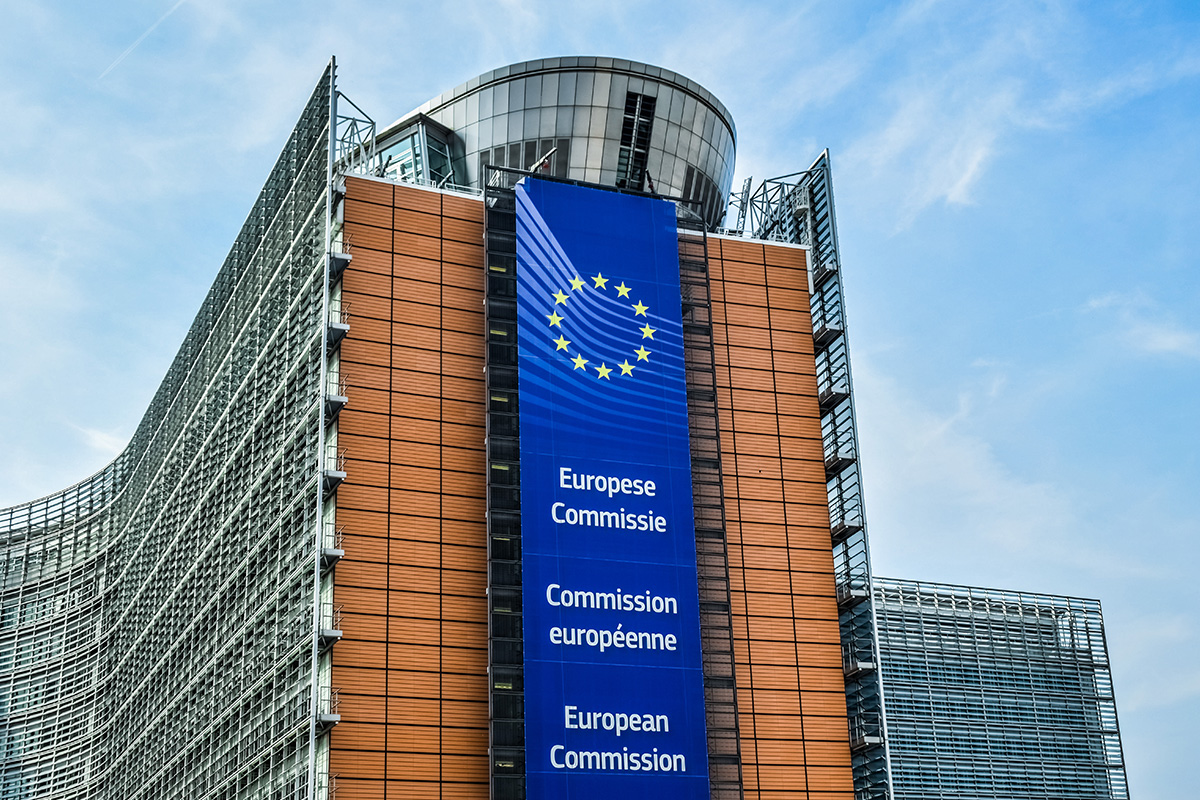
    European Commision Building

    From Farm To Fork

    The ministers discussed the farm-to-fork strategy focused on how to increase sustainability in European food systems. During the debate, the European Commission, which presented the farm strategy to the table in May 2020, reiterated the importance of including the objectives and goals of the strategy in future CAP national strategic plans through specific recommendations by country. The ministers urged the Commission to publish these recommendations as soon as possible and questioned their binding nature. The Commission confirmed that the recommendations are not legally binding and will take into account their implementation when approving each national strategic plan.

    The ministers also called for transparency, subsidiarity and a structured dialogue with the Commission in the process of approving the strategic plans. In addition, they emphasized the need to guarantee food security in the EU and a level playing field with food producers from third countries entering the EU market. They also called for comprehensive impact evaluations before turning the strategy’s objectives into legislative proposals.

    Member states widely supported the goals and objectives of the farm-to-table strategy and noted that adequate funding is a prerequisite for such a high level of ambition.

    CAP reform

    The Council held an exchange of views on the green architecture of the future CAP. More specifically, the ministers discussed the nature of the eco-schemes and the minimum proportion of non-productive land (GAEC 9) in the conditionality system.

    Several ministers questioned the proposal to have a minimum budget for eco-schemes, highlighting the risk of losing funds for farmers. The ministers discussed the possibility of moving amounts between the two pillars of the CAP, highlighting the need for flexibility. The ministers also reiterated their views on mandatory or voluntary ecological schemes.

    The Council addressed the issue of minimum participation of non-productive land. Following the suggestion of the Croatian presidency, the ministers discussed whether a uniform minimum percentage of non-productive areas should be established at the EU level. Supporters of the minimum percentage across the EU argued that this approach would create a level playing field and advocated establishing it at the current status quo: 5%.