Author Archives: EVENOR - TECH

RECAP holds in Serbia its sixth consortium meeting

RE.CAP

Feeding more than 7,000 million people in the world (Woldmeter) has become a challenging task for the governments of the world, trying to increase the productivity of agricultural spaces.

However, the increase in agricultural activity has caused several damages to the environment.

The European Union is aware of this fact, and has promoted a project that seeks increased productio
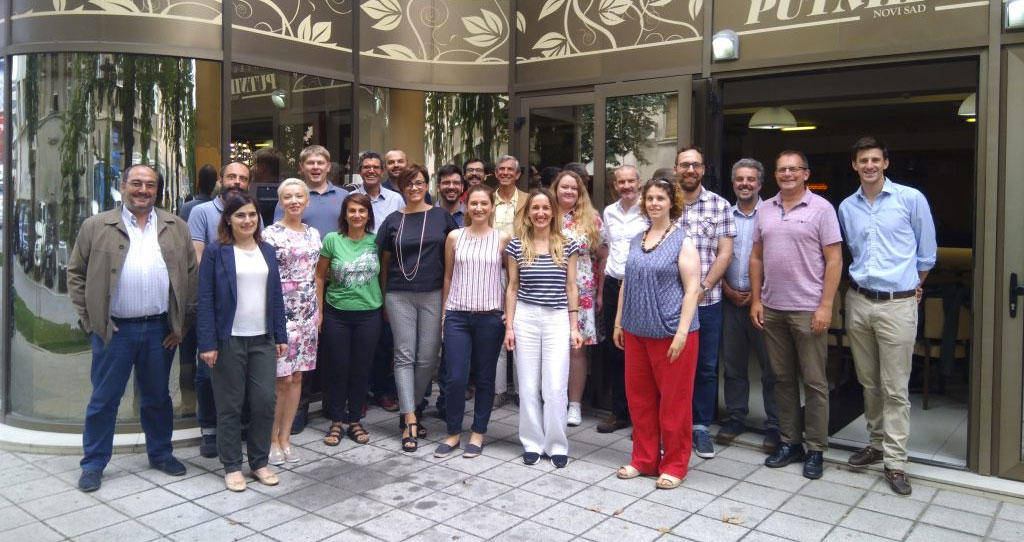
RECAP holds in Serbia its sixth consortium meeting

RECAP holds in Serbia its sixth consortium meeting

n through sustainable and economically viable solutions through the Common Agricultural Policy (CAP).

EU farmers must comply with cross compliance rules, regulations and legislative obligations to receive payments. Failure by farmers to comply with the rules can lead to the reduction or even the cancellation of their agricultural aid and rural development payments.

In this circumstance, the CONSOLE sister project RE.CAP was born, which aims to develop improved remote monitoring of CAP obligations and complementing the inspection procedures in the field, eliminating several of the affected loads.

In addition, RE.CAP will offer farmers a tool that will help them comply with the regulations imposed by the CAP, personalized information to simplify the interpretation of complex regulations and early alerts on possible non-conformities. RETRIEVE agricultural consultants to access the data available on the platform, subject to security and privacy policies, and develop their own services within the platform using design tools, libraries and communication with the database under an open approach.

Therefore, RE.CAP increases the efficiency and transparency of the procedures of public authorities when implementing CAP. It offers personalized services to farmers for better compliance with CC standards and enables the development of new value-added services by agricultural consultants through the combination of remote satellite sensors and user-generated data on one platform.
Project Website

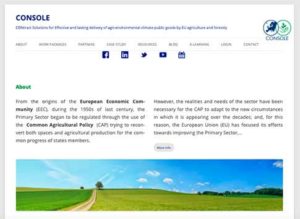
In the CONSOLE project we have developed a great Dissemination and Communication Strategy whose objective is to serve as a training plan for activities related to raising awareness, informing stakeholders and disseminating the results of the CONSOLE project.

Console Webpage

Console Webpage

The objective of this plan is to ensure that the project has a structured and streamlined approach to communicating about the project using various tools. The plan will also describe the upcoming tasks and how the project is expected to be exploited.

To achieve the proposed objectives, we have not only designed a page (which includes logos, type of letters, corporate colours, etc.) that facilitates user navigation, but we have also developed a complete digital marketing strategy.

One of the keys to the communication and dissemination strategy is the use of the blog on the website, where we regularly publish publications that, semi-automatically, are published on social networks (LinkedIn, Twitter, Facebook).

You can consult te deliverable 6.1 by clicking here.

LIAISON is an EU-funded ‘research and innovation’ project

LIAISON

As every Wednesday, in the CONSOLE project we want to present another sister project.

On this occasion we present the LIAISON project. This is an EU-funded “research and innovation” project that aims to help unlock the potential of “partnering for innovation” in agriculture, forestry and rural business.

The project is being developed by a multidisciplinary team of academics and professionals from 17 entities in 15 countries.

LIAISON consortium partners

This LIAISON website offers a window on their joint work between May 2018 and August 2021.

It is about optimizing the mixed groups of farmers, foresters and other stakeholders that aim to develop joint innovative solutions because they aim to address the economic, environmental, social and cultural challenges facing your farms and us as a society.

LIAISON has a highly interactive work program that is based on the participation of the consortium’s diversity of partners and your network of associated stakeholders, such as Rural Innovation Ambassadors, macro-regional stakeholders and our Project Advisory Group.

Together with relevant stakeholders, they develop a shared, but versatile, conceptual framework for analyzing and evaluating innovation and change processes in agriculture, forestry, rural business, and initiatives.

Catalogue of descriptive factsheets of all European case studies

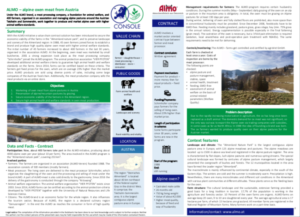
Deliverable D2.1 Catalogue of descriptive factsheets of all European case studies

On the blog of the CONSOLE project we want to present the Deliverable D2.1 “Catalogue of descriptive factsheets of all European case studies” within WP2 “Diagnostic of existing experiences on Agri-Environmental-Climate Public Goods (AECPGs)” of the EU Horizon 2020 project CONSOLE.

The main objective of this document is to provide a catalogue of implemented contract solutions for the improved delivery of Agri-Environmental-Climate Public Goods (AECPGs). 

The document describes the objectives and process of data collection and provides a catalogue of 62 factsheets.

The factsheets illustrate 60 European (EU) case study examples of contract solutions for the improved provision of AECPGs. Also, the catalogue contains 2 examples beyond Europe, of which 1 comes from the USA and 1 from Guadaloupe (FR). 

Catálogo de fichas descriptivas de todos los casos de estudio europeos.

Catalog of descriptive sheets of all European case studies.


We invite you to consult Delivery 2.1. by clicking the button

World Environment Day

World Environment Day

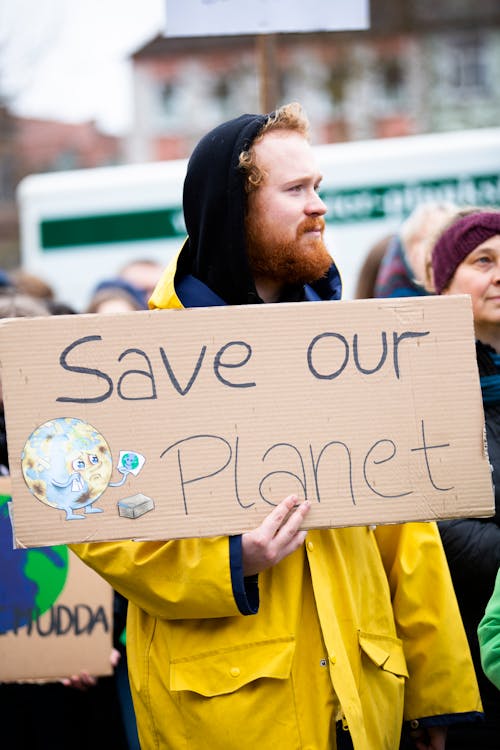
On June 5th, World Environment Day is celebrated, with the aim of sensitizing the world population to environmental issues, also intensifying political action.

However, it is the population, the main interested in respecting and respecting the environment.

Men argue. Nature acts.” -Voltaire

World Environment Day requires a global effort

Therefore, World Environment Day efforts focus on motivating people and communities to become active agents of sustainable development and change of attitude towards environmental issues.

World Environment Day

World Environment Day

And so, people are invited to think about how they consume. Companies to develop greener models. Governments to protect wilderness areas. To teachers, an education in natural values. Young people to speak out for the future of the planet. It required of all of us.

Why is celebrated on June 5th

The date coincides with the start of the Stockholm Conference in 1972, whose main theme was precisely the Environment. This anniversary was proclaimed by the United Nations General Assembly in 1972.

Since then, World Environment Day has been celebrated every year on June 5, involving governments, companies, celebrities and citizens to focus their efforts on a pressing environmental problem.

World Environment Day 2020 theme

 In 2020, the theme is Biodiversity, a major global concern in environmental matters. Recent catastrophic events such as the large-scale forest fires in Brazil, California and Australia, the locust invasion in the Horn of Africa and the COVID-19 pandemic, the forests that nature is sending us a message.

What and Why is biodiversity so important?

Biodiversity is the variety of living things on the planet. There are currently approximately eight million species on Earth, each living in a unique ecosystem. Each member of this biodiversity plays a fundamental role in the natural balance.

Biodiversity is the foundation of all life on Earth, and without it, human health is compromised. Clean water, clean air, nutritious food, all depend absolutely on biodiversity.

Human activities have been altering the planet for decades, causing an unprecedented loss of biodiversity. Glacial ice is melting, coral reefs have been cut in half, and large tracts of forest have been lost. We are on the verge of mass extinction and if we continue down that path, the loss of biodiversity will have serious consequences for humanity. They could collapse the food and health systems.

World Environment Day

World Environment Day

And … what is the European Union doing?

There are many strategies and projects that the European Union is developing to improve the environment. For example, last Wednesday, the European Commission published the Biodiversity Strategy, which presents measures to tackle the loss of biodiversity throughout the European Union and which will come into force in the year 2021.

The EU’s biodiversity strategy is a European policy that aims to stop the loss of biodiversity and ecosystem services in the European Union. It proposes a transformative and holistic approach to address the biodiversity crisis by protecting and restoring nature, addressing the main drivers of biodiversity loss, enabling transformative change, and taking the lead in the world.

The CONSOLE project partners are proud to be part of the European Commission’s strategy that aims to stop the loss of biodiversity, creating a dynamic and inclusive project that considers the reality of both farmers and other stakeholders.

Yorkshire Integrated Catchment Solutions Programme

iCASP

What is iCASP?

ICASP’s (Yorkshire Integrated Catchment Solutions Programme)  partners make it an ambitious and exciting program to generate benefits for Yorkshire by applying environmental science to the challenges of the watershed.

It is a 5-year program, funded by the Natural Environment Research Council, whose objective is:

  • Generate over £ 50 million in benefits for the Yorkshire economy by influencing investments, identifying cost savings and creating new products and jobs
  • Create a network of experts in watershed management
  • Inform policies and strategies
  • Produce materials that help environmental science to be used by professionals.

This case study focuses on the Yorkshire Ouse drainage basin, home to 6.7% of the UK population, 30% of the Northern Powerhouse region, including 10 metropolitan municipalities, and covers one third of the North of England. It contains the basins of the following rivers: Aire, Calder, Derwent, Don, Nidd, Ouse, Swale, Ure, Wharfe.

Why this geographical area?

This catchment area faces complex and costly challenges: floods and droughts, soil and water degradation, loss of productive agricultural land, and important ecosystems.

In addition, there are also high levels of regional investment, in cities like Leeds with the development of the South Bank and a new flood relief scheme, and in natural flood management and peatland restoration programs in highland areas.

These types of programs provide opportunities to use existing environmental science to address the specific knowledge needs and to use a better return on investment. We are confident that we can help deliver multiple benefits by working with basin-wide associations that adopt an integrated approach to water and land management.

Now, you can visit the iCASP webpage by clicking here.