Category Archives: Users

Farm-to-table strategy

Farm-to-table strategy: for a fair, healthy and ecological food system

The coronavirus crisis has underscored the need for a robust and resilient food system that works in all circumstances and is capable of ensuring access to a sufficient supply of affordable food for citizens.

Furthermore, the current situation It has made us aware of the interrelationships between our health, ecosystems, supply chains, consumption patterns and planetary limits.

And what is Clear is that we need to do much more to keep ourselves and the planet healthy.

We must be aware that both the current pandemic and the increasing recurrence of droughts, floods, forest fires and new pests are a constant reminder that our food system is threatened and it should focus on a system more sustainable and resistant.

The Farm to Table strategy

The strategy Farm to Fork is at the heart of the Agreement European Green, with the Aim to make food systems fair, healthy and environmentally friendly.

The strategy sets ambitious goals:

  • A 50% reduction in the use and risk of chemical pesticides and the use of more dangerous pesticides by 50% by 2030.
  • A reduction of nutrient losses by at least 50%, while ensuring that do not deteriorate soil fertility. This will reduce fertilizer use by at least 20% by 2030.
  • 50% reduction in sales of antimicrobials for farmed animals and aquaculture by 2030
  • Achieve 25% of agricultural land under organic agriculture by 2030

Another strategy is related to technology, since it is intended that all rural areas have access to the Internet (fast broadband) by 2025, to enable digital innovation and the progress of rural spaces.

The Farm to Fork Strategy

The Farm to Fork Strategy. Source: https://ec.europa.eu/food/farm2fork_en

And to achieve the goals the EU members must take ambitious and far-reaching measures to fully implement existing legislation on pollution by nutrients, in order to avoid the leakage of associated nutrients that pollute the air and water, becoming harmful to human health and the environment.

The European Commission will develop, together with the member states, an integrated nutrient management action plan in order to reduce and prevent further pollution from the excessive use of fertilizers and to encourage the recycling of nutrients from different types of organic waste such as fertilizers.

Guarantee sustainable economic development

To achieve the objective of organic farming in the EU, is essential to guarantee the sustainable economic development of the sector and promote demand. In addition to the Common Agricultural Policy (CAP) measures, such as organic schemes, investments and advisory services, and the Common Fisheries Policy (CFP) measures, the Commission will present an Action Plan on organic farming.

Support for the main actors in the primary sector

The strategy aims to reward farmers, fishermen and other food chain operators who have already undergone the transition to sustainable practices, enable the transition for others and create additional opportunities for their businesses.

Likewise, the UE citizens have demanded a significant change in the food market demanding healthy, abundant, nutritious and high-quality food. This transition will also allow them to make sustainability their trademark and guarantee the future of the EU food chain.

The transition to sustainability presents is an opportunity for all actors involved in the food chain. An example of a new green business model. It is carbon sequestration by farmers and foresters. Agricultural practices that remove CO2 from the atmosphere contribute to the goal of climate neutrality and must be rewarded, either through the Common Agricultural Policy (CAP) or other public or private initiatives (carbon market).
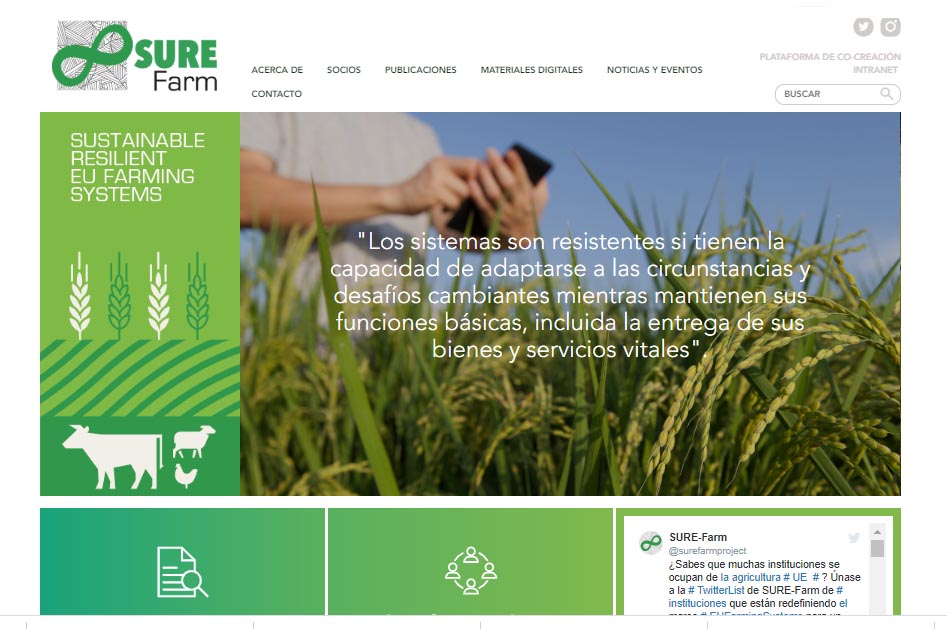
Sister project: SURE Farm

SURE Farm

SURE – Farm (Towards SUstainable and REsilient EU FARMing systems) is a H2020 project.

It is really interesting to present this magnificent project whose main objectives of SURE – Farm are to analyze, assess and improve the resilience and sustainability of farms and farming systems in the EU.

And to achieve this purpose, SURE-Farm creates scenarios and an innovative and comprehensive framework that enables resilience, develops a set of advanced risk assessment and management tools, as well as an improved demographic assessment model and a resilience assessment tool. For policy, and in conjunction with stakeholders, creates and applies an integrated resilience assessment model and designs roadmaps for implementation.

 And this will be achieved thanks to the magnificent work of the 16 partners, led by Wageningen University & Research, in which are studying eleven representative Study Cases along the European Union.

If you want further information about this sister project, feel free to click following button.

H2020 project
Main view of the SURE-Farm page.

But, if you want to get relevant information on projects, meeting and so on…, don’t hesitate to sign up for our newsletter.

Communication and dissemination strategy of the CONSOLE project

Communication and dissemination plan of the CONSOLE project

Currently, one of the most important elements when carrying out a project is the communication and dissemination process.


In the CONSOLE PROJECT We have developed the document D.6.1 “Dissemination and outreach from Task 6.2. “Website, Hub and communication materials“.

The main aim is to boost the impact of the project, through communicating the knowledge and results of the project.

The project must be targeted a wide range of audiences in order to link research, evidence-based policy and public awareness.

Also, the communication activities, such as workshops, social media accounts and websites have been discussed in this plan as well as identified actors and stakeholders in order to effectively promote innovation in delivery of Agri-environmental Climate Public Goods (AECPG) by EU agriculture and forestry.

You can view and download Deliverable 6.1. Simply by clicking the button.

And remember that you can receive information about the CONSOLE project if you subscribe to our newsletter.

Forum for the Future of Agriculture is held in Brussels.

Forum for the Future of Agriculture

Every spring (since 2007) the annual conference of the Forum for the Future of Agriculture is held in Brussels.

The objective of the FFA is to stimulate open discussions on the future of European and global agriculture and to assess what should and what can be achieved over time, giving equal weight to two challenges: food security and environmental security.

However, due to events related to the coronavirus, this FFA meeting will be held through a webinar.

Monday, June 15, 2020 | 3:00pm – 4:15pm CET

It seems that it will focus on the consequences that the COVID-19 crisis has created on all facets of the food system; from empty supermarket shelves to a shortage of farm workers and previously open borders are now closed.

Kofi Annan, Founder and President of the Kofi Annan Foundation, was one of the speakers of the FFA last year 2017

Kofi Annan, Founder and President of the Kofi Annan Foundation, was one of the speakers of the FFA last year 2017

The FFA claims that the pandemic has exposed systemic weaknesses that have not only been eliminated and repaired, but completely resolved to build resilience.

In turn, there is an urgency to develop an agrarian policy that not only guarantees recovery, but also this resistant and ecological sea.

Conclusion

From the CONSOLE project we believe that the FFA has opened up a possibility for all of society to participate in this outstanding Forum thanks to the use of new technologies.

Don’t forget that you can participate simply by clicking on the following button and filling out a simple form.


If you want to receive more news and information regarding activities related to the environment and agriculture, subscribe to our newsletter.

smartchain

SMARTCHAIN

SMARTCHAIN is another of CONSOLE’s sister projects that we would like to publicize on our blog.

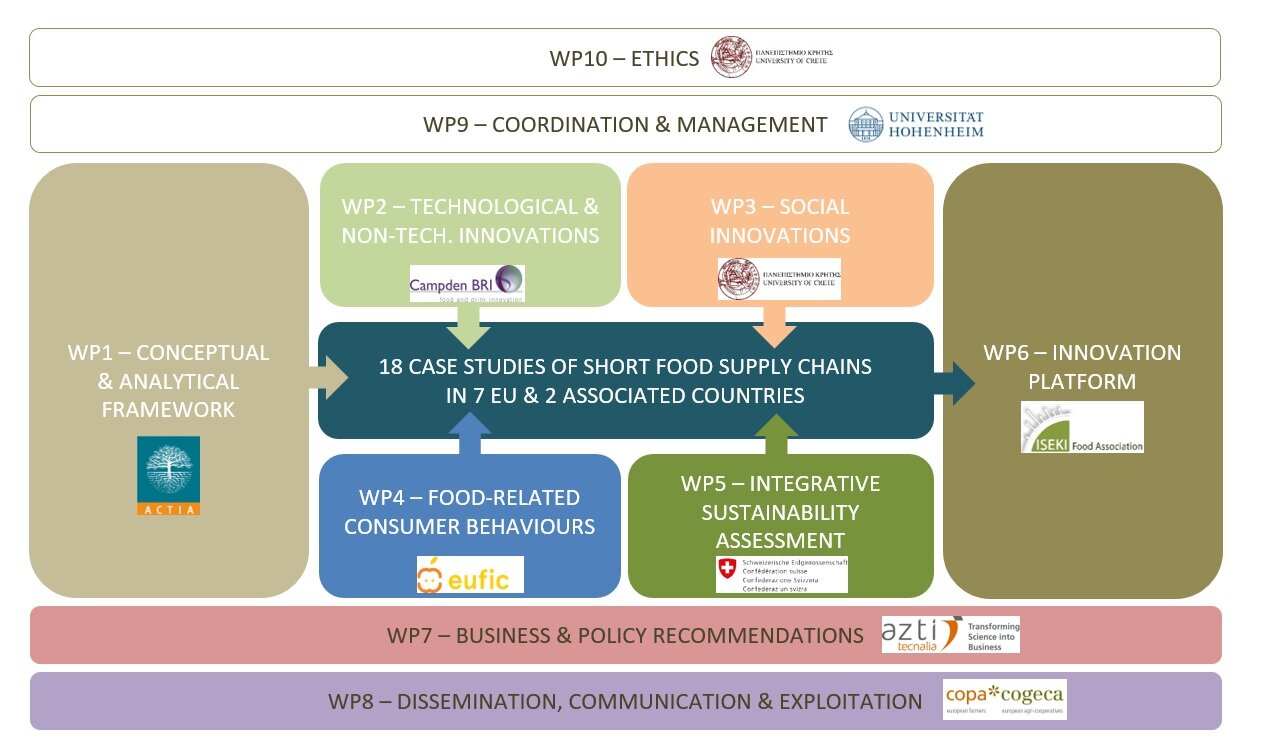
The SMARTCHAIN main objective ​​will be to stimulate demand-driven innovation in short, food supply chains to improve competitiveness and foster rural development using a multi-stakeholder approach.

The project is using an interactive innovation model in which all the actors involved in the project are working together to make the most of scientific and practical knowledge for the joint creation and dissemination of innovative solutions ready to solve practical problems.

(A supply chain involving a limited number of economic operators, committed to cooperation, local economic development, and close geographic and social relationships between food producers, processors, and consumers)

SMARTCHAIN’s 43 partners will evaluate 18 case studies of generalized short food supply chains with notable social, economic and ecological impacts on rural, peri-urban and urban communities in terms of innovation potential, consumer perspectives towards food supply chains short and general sustainability (environmental, economic and social).


Report on clustering with other projects -draft

Report on clustering with other projects -draft

In this post of the CONSOLE project blog we want to provide valuable information about how the project is developed.

Surely you already know that proper management of European projects. These solid projects are planned by developing a series of components that include a risk assessment, the history of a project, its objectives, the financial and human resources necessary to achieve them, etc.

What is a Deliverable?

But we want to emphasize the “deliverables” as a different result, tangible or intangible, of your project that occurs during the course of the project. Deliverables are developed by members of your project team in alignment with the overall objectives of your project.

A deliverable oriented to coordination

And precisely in this instalment we want to present the deliverable “Report on clustering with other projects -draft” (D 7.2), which can be downloaded from the CONSOLE project website.

This deliverable provides information on coordination with sister projects financed under the theme RUR03. In particular, it lists the actions taken during the first 6 months to promote coordination and the main points agreed with the other projects.

And with the purpose of promoting coordination between the three projects, the following activities were carried out: 

  • Physical meeting on the coordinators’ day organized on June 6, 2019 in Brussels, among the 3 project coordinators and with the policy officer; 
  • A Skype meeting on September 23, 2019 to adjust reciprocal initiatives and prepare for the next meeting in Brussels; 
  • Physical meeting on the morning of October 16, 2019 in Brussels, among the 3 project coordinators; 
  • Physical meeting in the afternoon of October 16, 2019 in Brussels, on the occasion of the presentation of the 3 projects to DG AGRi staff; Participants include the coordinators, the two project officers and the policy officer, three employees from DG Agri. 

In addition, the coordination strategy was discussed at the two subsequent meetings of the project in Seville and Amsterdam, with a dedicated session. 

Furthermore, to promote general coordination, the CONSOLE partner list has been shared with the main scientific contacts. Other projects with the WP leader diffusion CONSOLE are put in contact with the other guests to the meeting on the morning of the 16/10 (organized by ELO). A registry of common activities and initiatives will be established.

Common broadcast events

The possibility of considering common dissemination events has been taken into account. There will be two levels. 

The first refers to common dissemination events at the project level. At this level, the following activities have been considered: 

  • A common lunch seminar at the EU commission;  
  • A policy workshop at the time of the first review meeting;  
  • Common dissemination conferences at the end of the project (if time permits);  

In this post of the CONSOLE project blog we want to provide valuable information about how the project is developed.

Surely you already know that proper management of European projects. These solid projects are planned by developing a series of components that include a risk assessment, the history of a project, its objectives, the financial and human resources necessary to achieve them, etc.

What is a Deliverable?

But we want to emphasize the “deliverables” as a different result, tangible or intangible, of your project that occurs during the course of the project. Deliverables are developed by members of your project team in alignment with the overall objectives of your project.

A deliverable oriented to coordination

And precisely in this instalment we want to present the deliverable “Report on clustering with other projects -draft” (D 7.2), which can be downloaded from the CONSOLE project website.

This deliverable provides information on coordination with sister projects financed under the theme RUR03. In particular, it lists the actions taken during the first 6 months to promote coordination and the main points agreed with the other projects.

And with the purpose of promoting coordination between the three projects, the following activities were carried out: 

  • Physical meeting on the coordinators’ day organized on June 6, 2019 in Brussels, among the 3 project coordinators and with the policy officer; 
  • A Skype meeting on September 23, 2019 to adjust reciprocal initiatives and prepare for the next meeting in Brussels; 
  • Physical meeting on the morning of October 16, 2019 in Brussels, among the 3 project coordinators; 
  • Physical meeting in the afternoon of October 16, 2019 in Brussels, on the occasion of the presentation of the 3 projects to DG AGRi staff; Participants include the coordinators, the two project officers and the policy officer, three employees from DG Agri. 

In addition, the coordination strategy was discussed at the two subsequent meetings of the project in Seville and Amsterdam, with a dedicated session. 

Furthermore, to promote general coordination, the CONSOLE partner list has been shared with the main scientific contacts. Other projects with the WP leader diffusion CONSOLE are put in contact with the other guests to the meeting on the morning of the 16/10 (organized by ELO). A registry of common activities and initiatives will be established.

Common broadcast events

The possibility of considering common dissemination events has been taken into account. There will be two levels. 

The first refers to common dissemination events at the project level. At this level, the following activities have been considered: 

  • A common lunch seminar at the EU commission;  
  • A policy workshop at the time of the first review meeting;  
  • Common dissemination conferences at the end of the project (if time permits);  
  • A pre-conference event co-organized on the occasion of the EAAE Congress in August 2020 in Prague.