Author Archives: EVENOR - TECH

A letter of 2500 scientists warn of the need for reforms in EU agriculture

A letter of 2500 scientists warns of the need for agricultural reforms in the EU

The electronic magazine Edie (www.edie.net) has just published relevant news for all of us. In this post, they report that more than 2,500 European scientists joined and communicated with the EU parliament in a letter urging them to “act of science and undertake a far-reaching reform of the EU Common Agricultural Policy (CAP) without delay“.

In that letter, sent to the Committee on Agriculture and Rural Development (AGRI) and the Committee on the Environment, Public Health and Food Safety (ENVI), it states that there is an “unequivocal scientific consensus” between the intensification of agriculture and the usual Increasing loss of biodiversity.

Most alarming is that it describes the harmful effects that the intensive agricultural model, backed by the current CAP, has on biodiversity, stating that much of this damage could soon be “irreversible.”

It highlights the serious damage caused by industrial-type agriculture on the environment of the member countries, and the need for a CAP reform that takes into account an improvement in the environmental conditions of our rural areas.

According to the advice given by scientists, the CAP subsidies currently represent almost 60 billion euros each year, many of which fund intensive and factory agriculture.

The letter states that this money could be used for the recovery of biodiversity and the rural human population. It states that the EU must be a “pioneer in responding to these challenges” and that the CAP must be part of that response, rather than continuing to contribute to environmental degradation.

What do you think of the situation in EU agriculture? What can be the measures to be taken to improve the environment? (Leave comments on our blog)
Climate change adaptation is key to the future of European agriculture

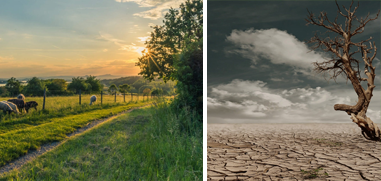
Climate change adaptation is key to the future of European agriculture

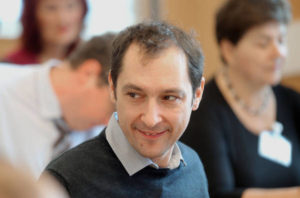
Blaz Kurnik, an expert from the European Environment Agency on the impacts of climate change, granted an interview published in the same agency, detailing the results included in the report “impacts of climate change and adaptation in the agricultural sector in Europe“.

Blaz Kurnik, an expert from the European Environment Agency

Blaz Kurnik, an expert from the European Environment Agency

In this report, which we recommend reading, the performance of agriculture and livestock is addressed, focusing on the needs of food production for humans and fodder for animals.

As Blaz Kurnik commented, climate change is causing adverse effects in the European agricultural sector, due to changes in temperature and rainfall, as well as extreme weather events, influencing production and may cause land abandonment. agricultural These conditions affect not only the availability of water for irrigation and feeding of livestock, but also the processing of agricultural products, transportation and storage.

The original EEA article also addresses a series of measures that the European Union is taking to adapt to these new scenarios.

These perspectives must be taken into account in the various studies and research carried out, as we have stated in the CONSOLE Project.

Wojciechowski warns about the loss of farmers in the fields of the European Union

Wojciechowski warns about the loss of farmers in the fields of the European Union

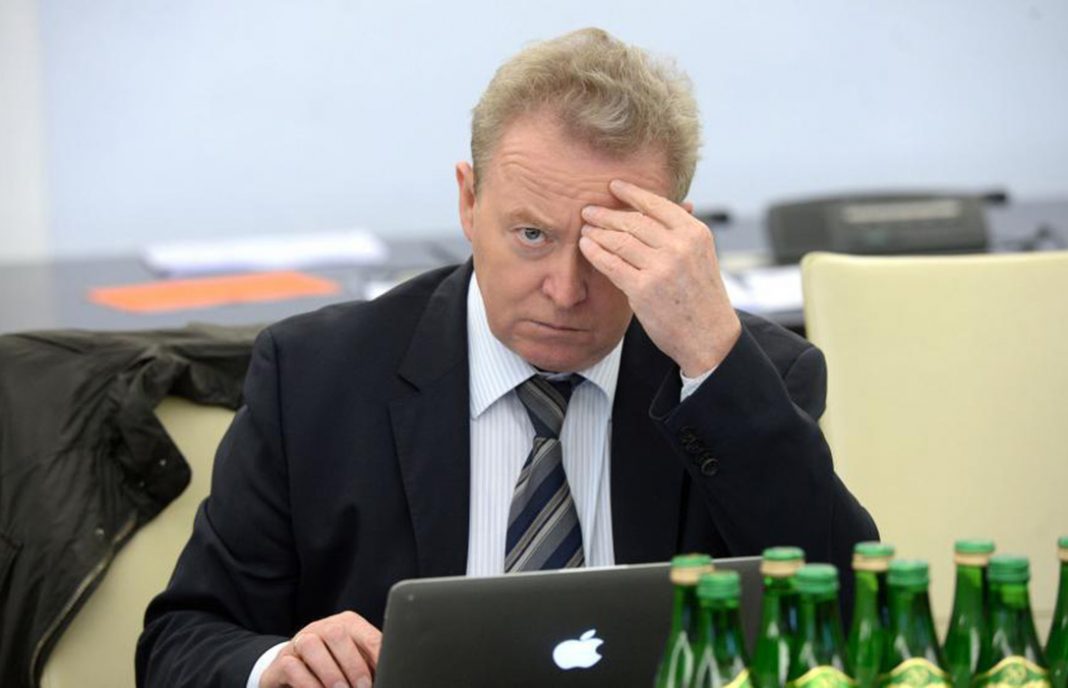
Polish Janusz Wojciechowski will replace Phil Hogan as new Agriculture Commissioner. On October 1th, as Commissioner of Agriculture and Rational Development, he faced a question and answer session with MEPs before being formally elected.

Janusz Wojciechowski will replace Phil Hogan as new agriculture commissioner
Janusz Wojciechowski as new agriculture commissioner

In his opening remarks to MEPs, Wojciechowski highlighted the difficulties faced by European farmers and spoke about the environment, animal health, generational renewal and the Common Agricultural Policy (CAP). (Agriland News)

For a decade, from 2005 to 2015, we lost 4 million farms in the EU. The number of farms was almost 15 million, and after a decade, there were less than 11 million. It means we lose 400,000 per year; more than 30,000 per month; More than 1,000 per day”

Our debate is planned for three hours. During this debate, more than 100 European farmers will probably lose their farm, their work, and for many of them it will be a very traumatic situation

During the parliamentary session, the politician repeatedly mentioned that a “long-term vision” for agriculture in the EU was necessary.

It is very important to have that vision because farmers ask us what our future will be, what our children’s future will be. It is very important to give the answer, a positive response, that there is a future for European agriculture

For these reasons, the agricultural policies of the European Union must be aimed at stabilizing and improving the standard of living of farmers and their families. And this, obviously, will be the case of CONSOLE that will take into account the different realities to propose real solutions.

Woman day

Women in agriculture

Yesterday, October 15th, International Rural Women’s Day was celebrated, and from the CONSOLE project we want to make the recognition they deserve.

According to EUROSTAT data (2016), less than 30% of farms in the European Union are managed by women, in addition to being still a small amount, there are large differences between member countries, as you can see in graph 1.

Graph 1.

Graph 1. Comparative rural manage by sex in European Union Members.EUROSTAT. 2016

But according to the European Commission reports, the proportion of agricultural women is growing – slowly – in the rural areas of the European Union in last decades thanks to the evolution of society and the guidelines carried out by the European Union and its member countries.

European Union support for women in rural areas

As the European Commission announces, the new agricultural policies developed must be aimed at making agriculture an attractive profession for both sexes.

Gender integration has long been addressed through rural development programs funded by the common agricultural policy. It is affirmed from this institution that the countries of the European Union are obliged to analyze the situation of women in rural areas, designing, with the results detected, development programs conducive to their integral development.

Celebrating International Women’s Day, the EU is not only helping to ensure that rural areas of Europe remain competitive and connected places to live, but it is also working to ensure that the next generation of farmers better reflects the balance of Europe gender.

Earthworm population as Agri-environmental Goods

Earthworm population as Agri-environmental Goods

PHYS.ORG Internet magazine has posted a research related to the improvement of Agri-environmental Goods in Rural Areas. Obviously, this research is closely related to the CONSOLE project.

This research carried out by the University of Cranfield (UK) led by Dr. Tom Storr, has shown that the use of cover crops to protect the soil and introduce organic matter increases the number of earthworms and provides financial savings for farmers.

The research assessed the impact of a mix of cover crops planted on a rotation of wheat, corn, and lettuce in lowland peat soils on a farm in Cambridgeshire between 2016 and 2019.

The earthworm population was three times higher after cover crop compared to a vegetation-free treatment of cover crops. What reduced tillage and cultivation costs (plowing and land preparation) also meant savings for the farm involved in the test.

According to Dr. Tom Storr, “Earthworm populations can be negatively affected by soil tillage, so by reducing the depth and intensity of tillage we can promote their communities to help soil structure, water infiltration, and nutrient availability “

Global Climate Movenment

27th. Global climate movement

Society is increasingly aware of the need to eliminate or mitigate the effects of human activities on the environment.

Agricultural Policy in the EU has partially re-oriented its objective towards the provision of public goods in rural areas (AECPG) acknowledging today’s society demands. In the legislative proposal for the next CAP programming period, it is foreseen to pursue this path further.

And specifically, the CONSOLE objective is to offer solutions, both for producers and to society in general, through development of improvements in agro-environmental and climatic goods within the framework of the new Community Agricultural Policy (CAP).

Global Climate Movenment