Author Archives: EVENOR - TECH

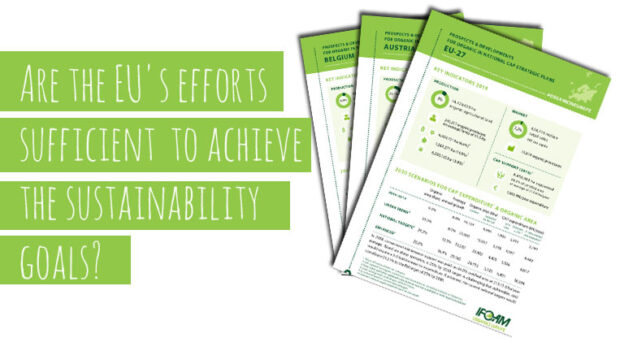
Are the EU's efforts sufficient to achieve the sustainability goals?

Are the EU’s efforts sufficient to achieve the sustainability goals?

We must thank our colleague Tania Runge for today’s publication, who recently sent us a publication carried out by IFOAM Organics Europe entitled “Organic in Europe”.

This entity has developed new research that highlights the insufficiency of both State Members and European Union aids and the need to dedicate part of the CAP budget to organic farming in order to achieve the Farm to Fork and Biodiversity Strategy’s objectives of 25% organic land by the year 2030.

Because, according to this study, the European Union should dedicate – from the year 2023 – 3 to 5 times the current amount of the CAP budget to achieve the proposed objectives.

The researchers point out that in order to achieve 25% of organic land in the European Union before the year 2030, it will be necessary for Member States to make more efforts, increasing payment rates per hectare; and those countries with a low level of support for the primary sector should increase their spending by 5 or 6 times if they want to achieve realistic objectives.

Researchers complain about insufficient efforts carried out by the European Union to achieve the objectives, since it should triple its organic surface in the period 2019-2023; increase CAP spending 3-5 times by 2030 and dedicate 9-15% of the CAP budget to organic.

Download the publication

You can download this report by simply clicking the button.
And if you have any contribution to make, don’t forget to make a comment.

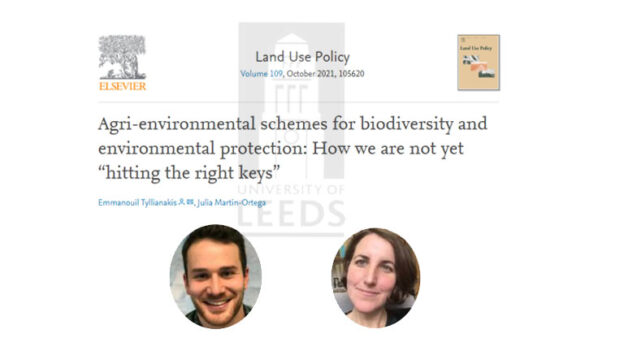
Agri-environmental schemes for biodiversity and environmental protection: How we are not yet “hitting the right keys

Agri-environmental schemes for biodiversity and environmental protection: How we are not yet “hitting the right keys

Emmanouil Tyllianakis and Julia Martin-Ortega, from the School of Earth and Environment, Sustainability Research Institute, at the University of Leeds have written a magnificent publication in the scientific journal “Land Use Policy” (Editorial Elsevier) that we want to recommend to you.

This research article systematically reviews and quantifies the academic literature that researches the factors that influence farmers’ enrolment in agri-environment schemes (AES). A long-time staple of EU policy, AES are considered as means to provide environmental and biodiversity benefits to society by compensating farmers to adopt sustainable agricultural practices and set land aside from farming. The main take away message is this: farmers’ are, in principle, willing to enrol in AES to deliver biodiversity and environmental features, but we are not yet hitting the right keys on how to best match farmers preferences. A significant leap forward would not simply require an increased quantity of primary studies, but a deeper reflexion on how the complexity of farmers’ preferences is best captured in the design of policy instruments that have to both share common features while being adaptable to context dependent characteristics at the landscape level

Objective

In their 35-year presence in EU policy, research has identified several characteristics of AES that can influence land managers’ acceptance, such as the requirement of monitoring of results achieve, the availability of free scientific advice to farmers and the option for AES that run more than 5 years. These factors, along with farm and sociodemographic characteristics are examined in this work in terms of their influence on the monetary compensation farmers ask to enrol in AES.

Methodology

This study employs the meta-analysis method, that allows to bring together findings from similar studies across different years and geographical locations. Meta-regressions were also used to quantify the impact of such variables on the compensation EU farmers ask to enrol in AES.

Results

Results come from around 25 studies from across the EU over a 10-year period and had significant variation from study to study. The mean compensation EU farmers ask for enrolling in AES is estimated to be around 327 Euros, per hectare. Factors such as farmer income, offering of scientific advice and support to farmers during their AES contract are found to incentivise adoption. As such, the authors suggest that tailored AES policies are the way forward, especially to incentivise managers of small land holdings and achieve landscape-wide environmental improvements.


Visit the paper

See the full-text article for more information.

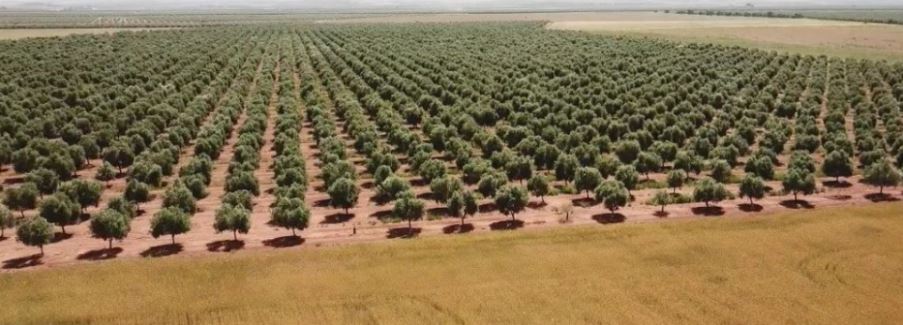
Monitoring and boosting environmentally beneficial practices in the olive grove within the framework of the new CAP measures

Monitoring and boosting environmentally beneficial practices in the olive grove within the framework of the new CAP measures

Summary

The combination of Sentinel satellite imagery, spatial software capable of analysis and assessing the eligibility of features and land uses based upon probability assessments and geotagged photography under controlled conditions together present the opportunity to minimise the need for traditional on-the-spot controls. The benefits of this approach will be multiplied if this data collection process occurs in synergy with other digital technologies, such as crop monitoring and yield forecasting, bringing greater efficiencies to farms. Soil Organic Carbon (SOS) and Soil moisture will be evaluated under the potential eco-schemes from the new CAP.

Objectives

Soil resources can be managed to help mitigate climate change, to increase agricultural production and to maintain soil quality. Land management can influence Soil Organic Carbon being the main component of Soil Organic Matter. Soil formation can be influenced by temperature, moisture regime, soil properties and their interaction with soil biota. The main objective is the monitoring of SOC changes in olive groves under beneficial practices as key variable for soil quality status and to help mitigate climate change.

Public Goods

Rural viability and vitality
Soil quality (and health)
Climate regulation - carbon storage
Climate regulation – carbon storage
Collaboration for sustainability between institutional landowners and tenant farmers

Problem description

The Integrated Administrative Control System (IACS) introduces specific regulatory requirements and technological tools (Geo Spatial Aid Application, LPIS, etc). The current IACS incorporates different databases (farmers’ register, animal register, LPIS, entitlement register, claim databases) but not a methodology to monitor agricultural beneficial practices. In the draft IACS legislation for the new CAP, there is the possibility of introducing data and monitoring systems using Copernicus/Sentinels satellite data or equivalent. Currently, there are several reports on the potential for
the use of technologies such as satellites, drones, artificial intelligence, which would support a large part of these tasks, reducing costs in transporting technicians to the plots and increasing the number of plots to be monitored. However, if these types of technologies are not facilitated and supported by policies, they can hardly be widely implemented. The methodology developed by Evenor-Tech is based on MicroLEIS and Carbosoil model, and earth observation techniques for monitoring water retention.
For that, validation in-situ model with EO services will be carried out considering tillage management variables (plantation system, vegetation cover, and residues). The final step is developing pedotransfer functions for finding relationships among indicators for soil carbon content and soil water retention and bands or indexes from Sentinel.

Collaboration for sustainability between institutional landowners and tenant farmers

Collaboration for sustainability between institutional landowners and tenant farmers

Summary

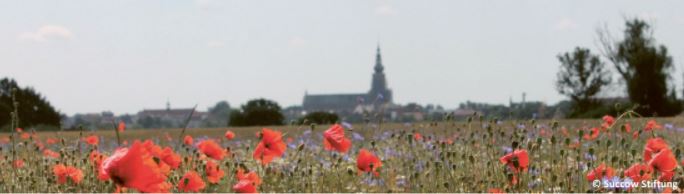
Key players are the institutional land owners of the region around the city of Greifswald and their tenant farmers. The land use should be shaped in a way to meet ecological, economic and social demands in the long term. The Michael Succow foundation has suggested joining forces by setting up the initiative called ‘agricultural initiative for Greifswald (Greifswalder Agrarinitiative)’ and has coordinated it until June 2019. After project ending the foundation supported the transfer into an association with the same name to ensure continuation of the cooperative approach. The current practice under which leased land has been awarded changed substantially. A transparent tendering procedure taking into account sustainability criteria has replaced rental price as key decision criterion. The agricultural holdings get advice on how to integrate environmental and nature protection measures into their farming practice. A cooperation agreement is signed between the agricultural holdings and the institutional land owners for new or renewed lease.

Objectives

  • Strengthening the sense of responsibility for natural resources of tenants and land owners;
  • Improving the sustainability of agricultural production;
  • Biodiversity maintenance and promotion;
  • Greater consideration of climate protection requirements and the protection of water bodies.

Public Goods

(Farmland) biodiversity
Climate regulation - carbon storage
Climate regulation – carbon storage
Soil quality (and health)
Water Qualiy
Water Qualiy
Collaboration for sustainability between institutional landowners and tenant farmers

Problem description

The agriculture in the region around Greifswald is dominated by large scale fields and an intensive agricultural production with a high share of rented land. The intensive land use has negative impacts on the agricultural soils and the neighbouring ecosystems. The initiative has been initiated by the Michael Succow foundation.

TheWildFarmOrganicFarmers

“The Wild Farm” organic farmers

Summary

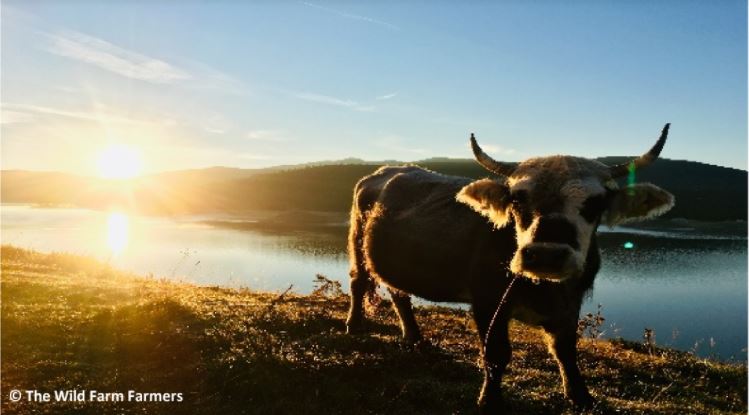
The contract solution includes a value-chain contract between the Wild Farm and a distributor – Bio Balev supermarkets. The farmers also have a contract with the government – the Ministry of agriculture and forests – for support on organically raised cattle. The farm is situated in the South Central region in Rhodope Mountains. The product is organically certified beef which is raised the whole year on natural meadows with high biodiversity features. The hay during the months with low food supplies comes from alpic mountain hay meadows, which are maintained in conservational manner by the farmers. Apart from having an important soil protection and water regulation role they are a valuable source of feed for the cattle. A number of higher plants with conservation status can be encountered on those meadows.

Objectives

  • Conservation of local biodiversity of rare breeds and ornithological species;
  • Practicing animal welfare principles and whole year free grazing of the cattle (half of the year in high mountain pastures);
  • Popularization of Bulgarian organic beef meat.

Public Goods

(Farmland) biodiversity
Rural viability and vitality
Quality and security of products
Farm animal health and welfare
The Wild Farm organic farmers

Problem description

The demand for Bulgarian meat with high quality increased during the last decade, as well as the need for organically clean products. The Wild farm concentrated its effort in producing meat and other supplementary products in a environmental-friendly way so that the demand for natural Bulgarian products can be met. At the moment those farms which are engaged in organic husbandry in Bulgaria mainly export their animals due to the lack of certified slaughterhouses for organic meat. The Wild Farm opened their own slaughterhouse at the end of 2018 which was the first one certified for organic meat in Bulgaria. Part of the animals in the farm includes local rare breeds which contribute to the conservation of local biodiversity. The farm is also situated in a high-nature value site with ornithological significant Egyptian vulture which is a globally endangered species. Therefore one of the mission of the farmers is to implement as many as possible conservation measures (including pesticide free agriculture, maintenance of their pastures consistent with the nesting regime of local bird species, etc.) in order to support the local biodiversity.The initiative was led by the Wild Farm.

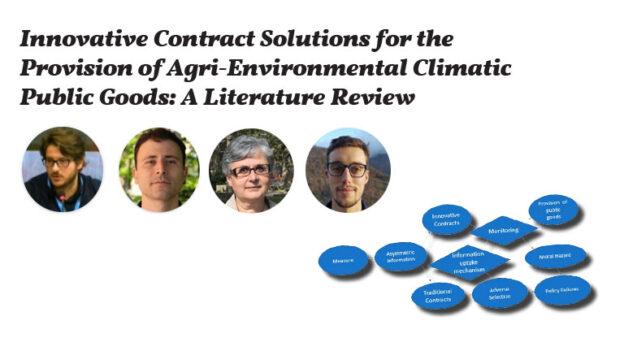
Innovative Contract Solutions for the Provision of Agri-Environmental Climatic Public Goods: A Literature Review

Innovative Contract Solutions for the Provision of Agri-Environmental Climatic Public Goods: A Literature Review

Again, we are happy to send you the information regarding a publication carried out by our colleagues from the CONSOLE project, Daniele Vergamini, Matteo Olivieri, María Andreoli (University of Pisa) and Fabio Bartolini (University of Ferrara).

The research is titled Innovative Contract Solutions for the Provision of Agri-Environmental Climatic Public Goods: A Literature Review” and they begin by arguing how the absence of public funding and the deterioration of the environment due to anthropic actions is encouraging the search for innovative mechanisms, that promote the provision of agri-environmental climate public goods (AECPG) by farmers.

The authors argue that the main failures of the current policy regime stem from the inability of policy makers to cope with the heterogeneity of private costs to produce agri-environmental goods in agrarian areas. This has caused innovative solutions to be sought.

Methodology

Faced with this situation, the researchers have carried out a systematic bibliographic review where the potential results-based collective contracts as innovative solutions are analysed in comparison with action-based instruments (most used today).

Results

Obviously, we are not going to reveal the research results here, as we want you to read this interesting research article.

The findings related to the type of external environment are collected by policy environment (choice of the type of policy, type of most suitable contract or implementation of the contract), agricultural and social environment (behaviour and knowledge of farmers) and ecological environment (inappropriate behaviour related to high productivity and scarce supply of Agri-environmental goods) that must be taken into consideration when developing strategies.

Likewise, the researchers highlight the importance of the innovative solutions included in the publications to avoid errors in the policies, propose discriminatory payment systems or new mechanisms of action.

Download

You can download the article by simply clicking the button.