Category Archives: Users

Sister projects: LIFT

LIFT

Introduction

One of our objectives in the CONSOLE Project is promoting the exchange of information among the denominated “sister projects”. For this task, we will create a special section dedicated to these projects related to the CONSOLE objectives in our blog. Today, we will talk about the LIFT Project (Low-Input Farming and Territories).

What is the LIFT project?

LIFT is a research project funded by the European Union’s Horizon 2020 research program (H2020-EU.3.2.1.1) coordinated by INRAE (French National Research Institute for Agriculture, Food and Environment).
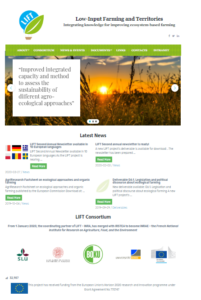
Sister projects: LIFT

Sister projects: LIFT webpage

Goals

The main objective of LIFT Project is to identify and understand how socio-economic and policy drivers impact on the development of ecological approaches to farming and assess the performance and sustainability of such approaches, taking into account different farming systems at farm, farm-group and territories scales.

The project is developed by 17 partners from 12 EU countries: INRAE (France), VetAgro Sup (France), SRUC (United Kingdom), Teagasc (Ireland), KU Leuven (Belgium), SLU (Sweden), UNIBO (Italy), BOKU (Austria), UBO (Germany), JRC (Belgium), IAE-AR (Romania), MTA KRTK (Hungary), IRWiR PAN (Poland), DEMETER (Greece), UNIKENT (United Kingdom), INRAE Transfert S.A. (France), ECOZEPT Deutschland (Germany)

If you want more about the project you can visit the website on the following link.

third project meeting

Third Project Meeting of CONSOLE

On March 19th, CONSOLE project partners held a conference call to replace the Third Project Meeting originally planned in Brussels and which failed due to restrictions caused by COVID-19.

Contents of the meeting

The third project meeting (Month 11) elaborated lessons learned from partial development of task 1.2 and accomplishment of task 2.2 and 2.3, and launch activities in task 1.3, WP3 and WP4; to feed the meeting and the related decisions.

Objectives

The meeting had the following objectives:

  • Discuss the results of case studies and fact sheets.
  • Discuss the lessons learned from Task 1.1, Task 2.2 and Task 2.3
  • Plan future activities in Task 1.2, 1.3, WP3 and WP4
  • Plan contingency for activities that could not be carried out in private stakeholder workshops expected to be attached to the third meeting

After the welcome of the project leader, Davide Viaggi, the virtual meeting began with the presentation of each Work Package (WP); in which where showed the progress, activities performed, and next steps in each WP. In addition, a properly planned on a meticulous schedule was proposed.

In order to overcome the failed workshops with stakeholders, we will develop virtual meetings in few weeks. Follow us so you’ll never miss an update.

Janusz Wojciechowski

Discover the European Commissioner for Agriculture

The purpose of this Blog post is to publicize the role and objectives of the European Commissioner of Agriculture, the Polish, Janusz Wojciechowski.

Janusz Wojciechowski was born 6th December 1954 in Rawa Mazowiecka, a town in central Poland.

He was a member of the European Parliament for a long time, in which representing the Polish People’s Party (PSL) (2004–2006), the Polish People’s Party “Piast” (PSL “Piast”) (2006–2010) and lately, Law and Justice (since 2010).

The mission of the European Commissioner of Agriculture is to ensure a modern and sustainable European agricultural sector that adapts to Climate Change or other adversities. In addition to providing affordable food for citizens and a fair standard of living for farmers.

Janusz Wojciechowski is part of the Group of Commissioners on the Green Europe Agreement to help farmers play their role in the transition to a climate neutral society by 2050.

To achieve the goals, a number of conditions have been developed obligations for all farmers in the European Union (EU), with a greater focus on voluntary environmental schemes.


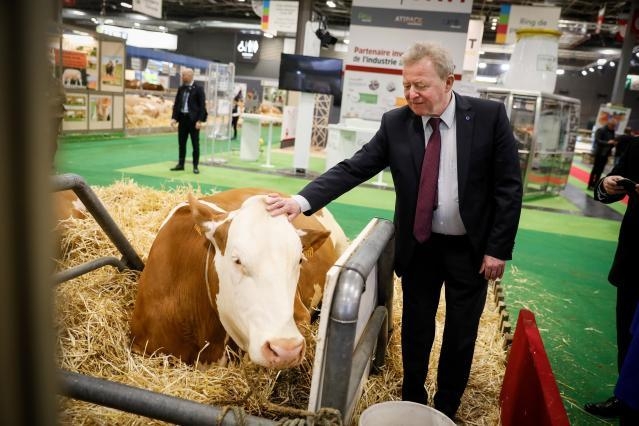
Janusz Wojciechowski, European Commissioner for Agriculture visited the Paris International Agricultural Show (22 and 25 February 2020). Source: European Commission - Audiovisual Service
Figure 1. Janusz Wojciechowski, European Commissioner for Agriculture visited the Paris International Agricultural Show (22 and 25 February 2020). Source: European Commission – Audiovisual Service

What are the Commissioner’s responsibilities?

The Commissioner’s responsibilities include:

  • Support a swift conclusion of the post-2020 Common Agricultural Policy (CAP) negotiations with a primary focus on food security, climate and biodiversity.
  • Work with Member States on strategic plans, adjusting the objectives of the EU as a whole with own national realities.
  • Develop a long-term vision for rural areas, supporting family and medium farms.
  • Support young farmers and guarantee a fair income.
  • Contribute to the ‘Farm to Fork’ strategic for sustainable, healthy and high-quality food.

Develop an action plan for organic farming in the EU.

  • Avoid intensive agriculture and reduce the use of pesticides, fertilizers, and chemicals as part of a zero-pollution ambition.
  • Explore ways to strengthen the geographical indications system.
  • Improvement of animal welfare standards.
  • Carry out an impact evaluation of trade agreements in agriculture.

In short, the European Commissioner of Agriculture objectives are clear, betting on sustainable agriculture, according to the realities of each member country of the European Union.

Janusz Wojciechowski points out in an interview on the European portal EURACTIV.com, European society will require large doses of “resilience” and the need to be more sustainable in order to face the current climate crisis in the future.

Bio-Based and Applied Economics

Bio-Based and Applied Economics Editorial

Bio-Based and Applied Economics, is an international scientific journal published by the IAEAA (Associazione Italiana di Economia Agraria ed Applicata).

Bio-Based and Applied Economic

PhD Daniele Moro (Università Cattolica del Sacro Cuore), PhD Fabio Gaetano Santeramo (Università degli Studi di Foggia) and PhD Davide Viaggi (Università di Bologna) analyze their evolution and their valuable contribution both to society and to the scientific field.

But this editorial also inform us how it has been adapted to the needs, such as an improvement in the speed of the process that goes from the presentation of the researches to their publication.

It can download the editorial or visit to the Bio-Based and Applied Economics website by clicking on the following buttons:

Smart Farming - Digitilization of Agriculture & Vision for the new CAP

EVENT: Smart Farming – Digitilization of Agriculture & Vision for the new CAP

Date29 Jan 2020 (10:30 to 12:45)SectionAgriculture & Food
AddressEuropean Parliament
  BRUSSELS
Event LocationBrussels
LinksMore Information

On the 29th of January, IoF2020 & SmartAgriHubs will organise a high-level event in the European Parliament in Brussels, hosted by ECR Group. The event will highlight project achievements and contributions to EU agriculture, as well as look to the wider world of new agricultural techniques and their future. The meeting will convey important speakers from the agri-food sector alongside representatives from the EU institutions.

From the European Parliament side, MEP Bert-Jan Ruissen (Agri committee), MEP Petros Kokkalis (Envi committee) and MEP Norbert Lins (Agri committee Chair) will chair the different sessions on EU agri-food challenges, data use in smart farming technologies and the long-term vision for agriculture in the new CAP perspective.

CEMA is glad to announce Dr Ivo Hostens, CEMA Technical Director, will participate as speaker session II: Role of data management and how to enhance the adoption of smart farming technologies

Agenda

OPENING SPEECH: European Commissioner for Agriculture and Rural Development, Janusz Wojciechowski

10.00-10.45h Session I: EU Agriculture and food challenges: the role of digitalization

Joel Bacquet – EU Commission DG Connect,

Kerstin Burseg – EIT Food, Innovation Programme Manager

Edwin Hecker – Schuttelaar & Partners, IoF2020 & SmartAgriHubs ecosystem building leader

Eduardo Cuoco – IFOAM-EU, Director

10.50 – 11.35h Session II: Role of data management and how to enhance the adoption of smart farming technologies

Grigoris Chatzikostas – Biosense Institute, WP leader for IoF2020 and SmartAgriHubs project

Ivo Hostens – CEMA, Technical Director

Daniel Azevedo – COPA-COGECA, Director Agri-Tech

11.40 – 12.35h Session III: Long term vision for the EU agriculture, CAP reform and the place for smart farming: how will it benefit the EU citizens?

Doris Marquardt – EU commission DG Agri, IoF2020 &SmartAgriHubs Project Officer

Jannes Maes – CEJA, President

George Beers – WUR, IoF2020 & SmartAgriHubs Project Coordinator

green agreement in the EU

Farmers and Industry expect the support of science to reach a green agreement in the EU

One more time, the press in which is specialized special in agriculture issues, such as online magazine EUROACTIV, echoing the demands and needs of farmers in science is done to achieve a Green New Deal.

The Common Agricultural Policy (CAP) reformed, aim to transform the agricultural sector in Europe, guarantee that its food security of society and preserving the environment and human health; working to make the EU carbon neutral.

There is no doubt that climate neutrality will bring significant opportunities, such as the potential for economic growth, new business models, new forms of work and technological development”. Research, Development and innovation (RDi) will play a key role.

It’s not about money

Joanna Dupont- Inglis, general secretary of the European Association of Bioindustries (EuropaBio), told EURACTIV that the conversation around the CAP often discussed the provision of financial support to farmers.

However, it expects the development of pro-innovation policies that can stimulate sustainability in agriculture for the benefit of farmers, citizens and the environment, adding that the adoption of modern agricultural methods, such as the application of biotechnology.

Therefore, Dupont- Inglis said he hoped that the Commission “will do more to deliver practical and science-based rules for products resulting from agricultural biotechnology,” and especially stressing the importance of the Commission eliminating “scientifically unjustified regulatory requirements for transgenic crops “.

Read the EUROACTIV post.