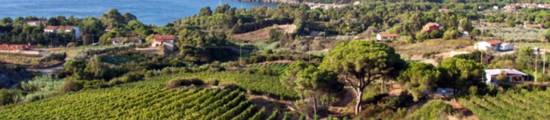
Under the ALMO brand, a meat processing company, a foundation for animal welfare, and 400 farmers, organised in an association and managing alpine pastures around the Austrian Teichalm and Sommeralm, work together to produce and market alpine oxen with higher animal welfare standards.
Summary
Marketing of oxen meat from alpine pastures in Austria
Preservation of alpine/mountain pastures by grazing.
Secure economic viability of the farmers in the Almenland region.
Secure high animal health and welfare standards in oxen meat production.
Public Goods
Farm animal health and welfare
Landscape and scenery
Rural viability and vitality
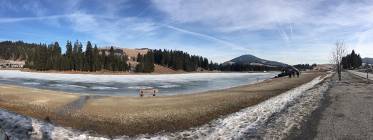
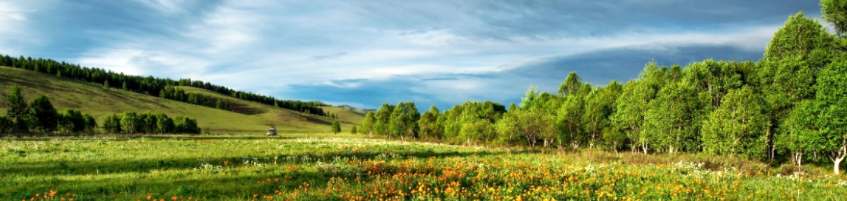
ALMO landscape
Problem description
Due to the rapidly increasing motorization in agriculture, the ox has long since been replaced as a draft animal. The domestic demand for ox meat was not significant, so the only way out was to export the Alpine oxen via trading companies with subsidies, in some cases as far as North Africa. In 1988 the idea of founding a brand was born. The ox farmers wanted to produce quality oxen on their alpine pastures for the Austrian market.
MIND STEP is a European research project aiming to support public decision making in agricultural, rural, environmental and climate policies, taking into account the behaviour of individual decision-making units in agriculture and the rural society.
Policies like the EU CAP are widening the scope to contribute to the Paris climate agreement and the Sustainability Development Goals, hence there is a move of the CAP to farm specific measures and an improved link to environment, climate change and ecosystem services to build a a fair, healthy and environmentally friendly food system. Member States and regions develop their own CAP strategic plan with more attention to the regional implementation of the CAP. This wider scope and measures with a focus on individual farmers ask for a new generation of impact assessment tools. Current state-of-the-art agricultural models are not able to deliver individual farm and local effects as they are specified at higher levels of aggregation.
Making use of improved possibilities opened up by progress in the ICT area MIND STEP will improve exploitation of available agricultural and biophysical data and will include the individual decision making (IDM) unit in policy models. Based on a common data framework MIND will develop IDM models, including agent-based models, focussing on different topics in an integrated manner in different regional case studies. The IDM models will be estimated and calibrated using agricultural statistics and big datasets, drawing on established econometric and evolving machine learning techniques and using both traditional models of optimising behaviour and theories from behavioural economics.
MIND STEP closely cooperates with a range of stakeholders to co-create and apply the MIND STEP model toolbox to selected regional, national and EU wide policy cases.
MIND STEP is a partner to the AGRIMODELS cluster (https://agrimodels-cluster.eu/) bringing together research projects which operate in countries across Europe to increase the modelling capabilities in the agriculture sector.
Coordinated by Stichting Wageningen Research (The Netherlands) the MIND STEP consortium includes 11 partners from 8 countries.
Additional information
For more information please visit the MIND STEP project website and sign up for their 6 monthly newsletter.
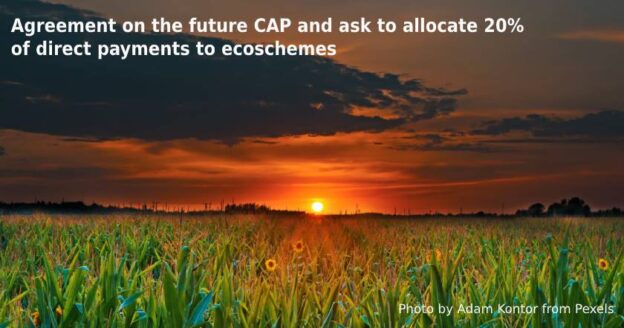
The Ministers of Agriculture of the European Union have reached this Wednesday, October 21th, an agreement on the rules of the Common Agricultural Policy (CAP) that will come into force in 2023 and in which they protect by reserving 20% of direct payments to new eco-schemes.
After 42 hours of negotiations, the Member States have set their red lines for the discussions that are to begin in the coming weeks with the European Parliament.
The Greek Minister of Agriculture, left, with his Cypriot counterpart chat before the meeting. Source: POOL
The biggest sticking point between the Member States has been the characteristics of the new aid to farmers and ranchers who want to go beyond the mandatory requirements and take additional measures in favour of the climate and the environment. Finally, the Twenty-seven have agreed to dedicate 20% of direct payments to the so-called eco-schemes.
«In my opinion, there are two vital aspects: mandatory eco-schemes are key. And second, a mandatory minimum budget »
Julia Köckner (German Minister of Agriculture)
The introduction of this lower limit has generated many doubts, especially due to the possibility that producers cannot comply with the additional climatic criteria and it is not possible to distribute the funds reserved for these cases. The document approved by the community partners provides for a series of flexibility measures that have finally convinced the community partners.
Specifically, the agreement of the Ministers of Agriculture contemplates that, during the first two years of application (2023 and 2024), funds for unspent eco-schemes from a percentage of 10% can be dedicated to other interventions.
The new common agricultural policy will not enter into force until 2023, to give Member States time to adopt the new provisions. In any case, it will have a budget for the next seven years of 390,000 million euros, of which 291,100 million are planned for direct payments from the European Agricultural Guarantee Fund (EAGF) and 95,500 million in aid from the European Agricultural Fund for Rural Development (EAFRD).
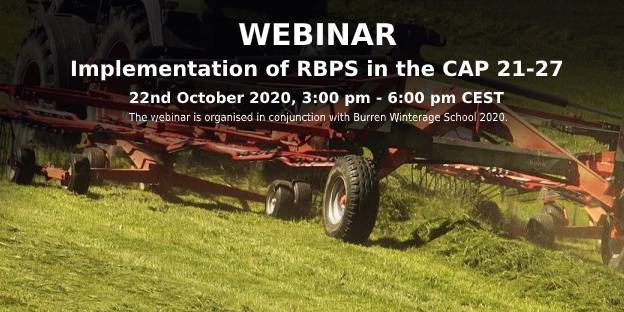
Next Thursday, PhD. Lena Luis Schaller (@lenaschaller2) from BOKU will show an overview of the results from the CONSOLE case studies in the webinar “Implementation of RBPS in the CAP 21-27”.
This Webinar is hosted by the Results Based Payments Network and will take place during the Burren Winterage School 2020. From the CONSOLE project we encourage you to participate in this event to find out what the future of the CAP will be.
⏰ DATE AND TIME
22nd October 2020, 3:00 pm – 6:00 pm CEST (2:00-5:00 pm Irish time)
Please find the details for registration and the program under the following link:
Learn from 6 contract solutions that foster the collective and cooperative implementation of management changes in order to enhance the provision of agri-environmental-climate public goods in Europe.
If you like to know more, more details about the rest of case studies clicking here.
We use cookies to ensure that we give you the best experience on our website. If you continue to use this site we will assume that you are happy with it.OkNo