Author Archives: EVENOR - TECH

Farm2Fork2021_Conference

Farm to Fork conference – Building sustainable food systems together

The European Commission with the aim of building sustainable food systems together will hold an annual meeting of stakeholders to help shape the EU’s path towards sustainable food systems (14th-15th October).

That’s why, the actors of the food value chain, public authorities, international organizations and civil society, as well as other citizens and interested public are invited to join the debate every year and contribute to the implementation. from farm to fork strategy.

The event will also provide a forum on the challenges and opportunities linked to the transition to sustainable food systems, as well as possible additional areas for intervention.

You can check the event programme by clicking on the folowing button

Green Deal Dutch Soy

Biodiversity monitor for DAIRY farming

Summary

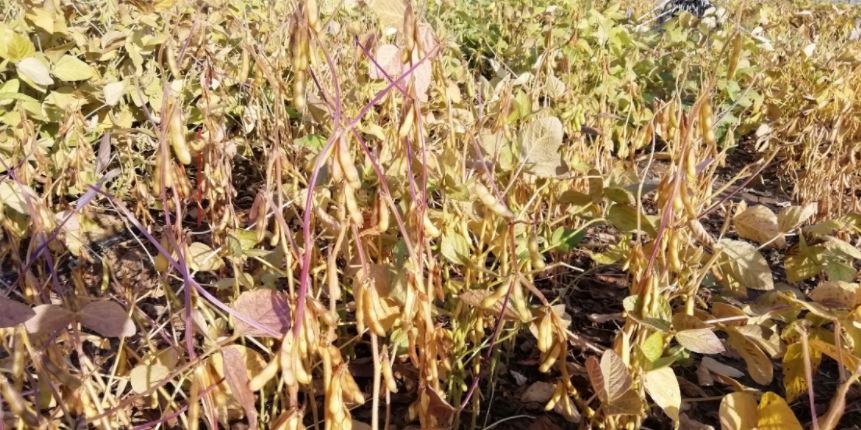
The Green Deal Dutch Soy is a contract between national government, regional governments, a soy processer / feed producer, and farmers. They aim at establishing a viable production chain for soy in the Netherlands, by identifying the most suitable varieties and ensuring a solid soy production volume that allows a viable chain, with fair prices for soy farmers. Being a legume crop, soy can sequester nitrogen in the soil, with that reducing the need for fertilizers in the follow up crop and benefiting soil quality in the long run. Furthermore, increasing the soy area in the Netherlands can have a positive impact on biodiversity. The Green Deal Dutch Soy is a set of non-binding commitments.

Objectives

  • The Green Deal Dutch Soy aims to realise 10 000 ha/year harvested area and an average yield of at least 3500 kg/ha.

Public Goods

Landscape and scenery
Quality and security of products
Climate regulation - carbon storage
Climate regulation – carbon storage
Climate regulation - carbon storage
Climate regulation – greenhouse gas emission
Rewilding of detention basin in Massa Lombarda

Problem description

Green deals have been established in the Netherlands to stimulate entrepreneurship and to enable entrepreneurs and societal partners to test and implement green solutions in a bottom-up, solid, quick, but robust way. They aim to overcome bureaucratic and related time consumption barriers that normally hamper innovation. The specific Green Deal Dutch Soy specifically responds to the unsustainable soy production standards in the current Dutch trade partners for this crop.

World Agriculture Day

World Agriculture Day

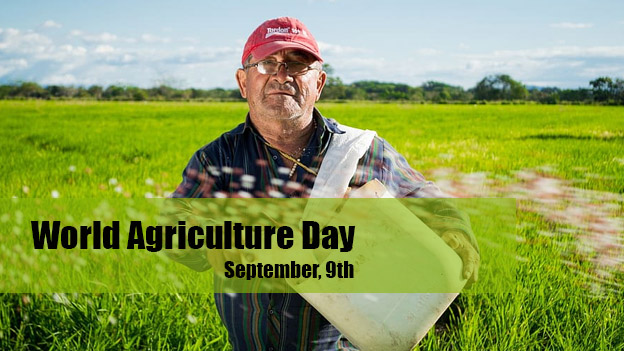
Today, the CONSOLE project partners – according to the World Agriculture Day, want to honour one of the oldest activities for the subsistence of humanity: Agriculture.

On September 9th, World Agriculture Day is celebrated, an activity of great importance for the development of both families and economies in the world, and which has been especially important in times of pandemic.

What is agriculture?

Since the Neolithic Revolution, human beings have developed a set of activities related to the cultivation of the land and the treatment of the soil for the production and obtaining of Food (e.g., vegetables, the vegetables), fibres (e.g., linen, cotton), and so on.

Already in the Middle Ages, some innovations were applied, through new forms of production (such as irrigation), increasing crops and the variety of agricultural products.

Until very recently, agriculture has been the life support of the economy of the countries of Europe (and indeed of the whole world) where around 80% of the labour force was employed.

By then, everyone shared the work, men, women and children. There are many who claim that it was a society with environmental balance and human lived in harmony with the land, water, forests, animals; both domestic and wild. Because there was hardly any waste generated, every last resource was used, and even the organic remains.

The forests were cared for. The scrubland was used for heating and furnaces, and the trees provided wood, controlling its felling. There were almost no fires. The rivers and fountains had clear, uncontaminated water and the children bathed in rivers, ponds and ditches, without problems.

In the farmers’ house there were chickens, rabbits, pigs, and even sheep and goats in many cases. They did not know or use herbicides and insecticides. Everything was recycled and reused.

However, at present the agricultural sector has state-of-the-art machinery and technology that facilitates tillage, cultivation and harvesting, considerably increasing production levels and the quality of its products, satisfying the consumption needs of families at the level world. However, it has also caused adverse effects (soil erosion and compaction, loss of biodiversity, emission of pollutants, etc.).

Some advances in agriculture

The primary sector has made notable advances in improving production techniques and methods, as well as in the quality of food. Among them, it can highlight:

  • GPS technology for the measurement, registration and calculation of land area.
  • Temperature and humidity sensors, for the measurement of various Vegetation Indices and/or chlorophyll content, in order to minimize the impact of the soil and climate during the plant growth stage and production, detecting the vegetation content and the amount of nitrogen in the crops.
  • Use of drones to obtain data such as water saturation levels, vegetative and water stress, plant height and determine the biomass of crops.
  • GIS and Remote Sensing software applied to agriculture, for data collection, temperature, climatic and soil conditions, crop yield (…).

How to celebrate this world day?

On World Agriculture Day, activities, events and conferences are held to expose the changes, advances and contributions of agriculture in the whole world.

We would like to highlight the excellent workshop developed by the partners of the sister project EFFECT in which the partners of the CONSOLE and CONTRACTS projects have also participated, contributing our experiences and allowing us to advance together.

Bauska Nature Park tidy up of territory

Bauska Nature Park tidy up of territory

Summary

Investment in public property of Bauska local municipality (Lithuania) adjacent to private person’s property is promoted by regulations on real estate tax rebate. The landowners can apply for a reduction of the real estate tax in order to tidy up the bordering territories, to improve sidewalks, construction or reconstruction of streets, children’s and sports grounds, water parks, sewerage systems etc. The Bauska County’s natural environment is a resource of active recreation and tourism. The Bauska County has several particularly protected areas, and the nature park „Bauska” (NATURA 2000 – EU protected natural area of 892.9 ha) is the most important of them, and there are also several natural monuments and natural restricted areas.

Objectives

  • To bring new ideas and insights to the development of the area, improve the landscape and the environment valuable experience;
  • To promote the formation of the landscape of the local authority and the maintenance of the territory;
  • To stimulate the active participation of landowners in the maintenance of clean and tidy local authority territory and creation of good environment.

Public Goods

Landscape and scenery
Rewilding of detention basin in Massa Lombarda

Problem description

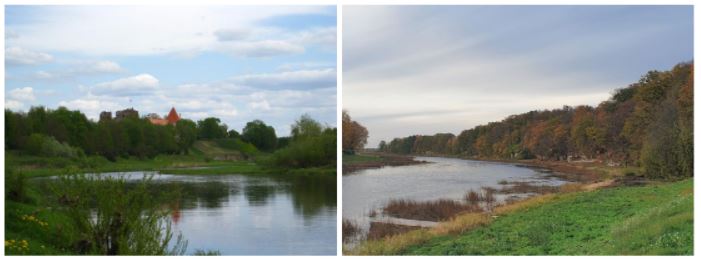
Unfortunately, there are several landscape degradation objects in Bauska – abandoned buildings, ruins, overhead transmission lines. It is desirable to remove objects degrading the environment and to plant rows of trees to cover building and environmentally degradable objects. Potentially landscaped areas where serious work is still needed to improve the landscape and the environment. In this area it is necessary to cut bushes, where it is necessary to level the terrain by removing scraps, preserving and creating ponds. In many places, the landscape is defaced by old ruins of agricultural or industrial structures, as is the case on the right bank of the Ceplis and Jumpravmuiza manor, as well as by shrubs.

A very short history of organic farming in Europe

A very short history of organic farming in Europe

Although organic farming has been around since the 1960s[1] (Pinton and Zanoli, 2000), it is not until the mid-1980s that it grew significantly, and in the 1990s when it experienced a breakthrough in Europe. (Foster and Lampkin 1999a, 1999b). The reasons are the growing public interest in organic farming, political support, increased consumer demand, animal health, food safety and economic problems in the conventional agricultural sector.

Labels emerged as a means to avoid confusion between products from different production practices and as a basis for the development of organic farming in society (Michelsen, J. 2001)

As a result of this new way of producing, European countries are forced to create rules to regulate the situation.

For example, France was the first country to recognize organic farming in the political context with the Agricultural Law No. 80502 in 1980; and they introduced the first eco-label for organic products four years later.

For its part, in Austria, the initiative for the regulation of organic products appeared in 1983, with the Austrian Codex Alimentarius (Michelsen et al., 2001). Denmark, in 1987, introduced the criteria and public certification of organic production.

Thus, before 1991 most of the current EU countries (except Greece) had regulated organic farming.

The European Union was quick to introduce a series of norms (EU Regulation 2092/91, in 1999 supplemented by common rules for organic livestock production: EU Regulation 1804/99); as well as financial support for those farmers who took advantage of the measures that accompanied the Common Agricultural Policy (CAP).

Starting with the 1992 CAP reform, with the introduction of a broad support program (EC Reg. 2078/92), these measures were intensified with the following CAP reforms, currently reaching strong growth and dynamic important in agricultural production and in the food market.

The objective of these regulations was to encourage farmers and ranchers in the Member States to offer a subsidy scheme to convert or maintain agricultural production methods, causing positive effects on the environment.

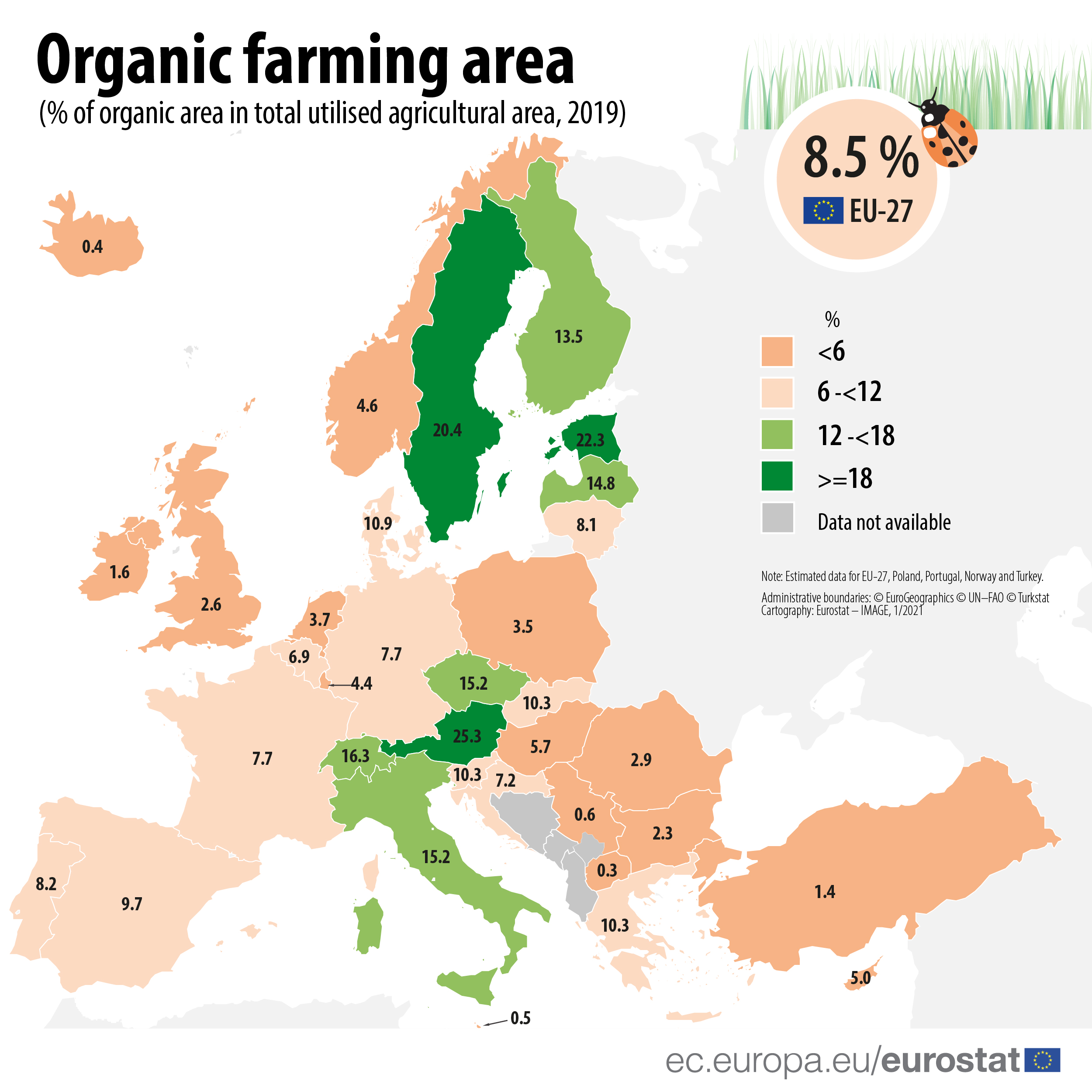
And thanks to these regulations, the increase in organic farming has reached almost 13.8 million hectares, representing 8.5% of total agricultural land (2019; EUROSTAT, 2021; Figure 1); mostly represented in the states of Austria (25.3%), Sweden (20.4%) and Estonia (22.3%); in contrast to the easternmost countries of Europe, Norway (4.6%), the United Kingdom (2.6%) and Ireland (0.4%).

Figure 1. Organic Farming Area in EU (2019). Source: EUROSTAT

References

Padel and Lampkin, 2007. The Development of Government Suppot for Organic Farming in Europe. In: Organic Farming. An International History. Cabi (Edit);

Michelsen J. 2001. Recent development and political acceptances of organic farming in Europe. Sociology Ruralis. 41. 3-19;

Pinton, R., Zanoli., R. 2000. Organic farming in Italy. http://www.organic-europe.net, 30.3.2000. Stiftung Ökologie & Landbau (Edit).Link


[1] Some authors highlight the importance of Italy as a pioneer in the development of organic farming

Rewilding of detention basin in Massa Lombarda

Rewilding of detention basin in Massa Lombarda

Summary

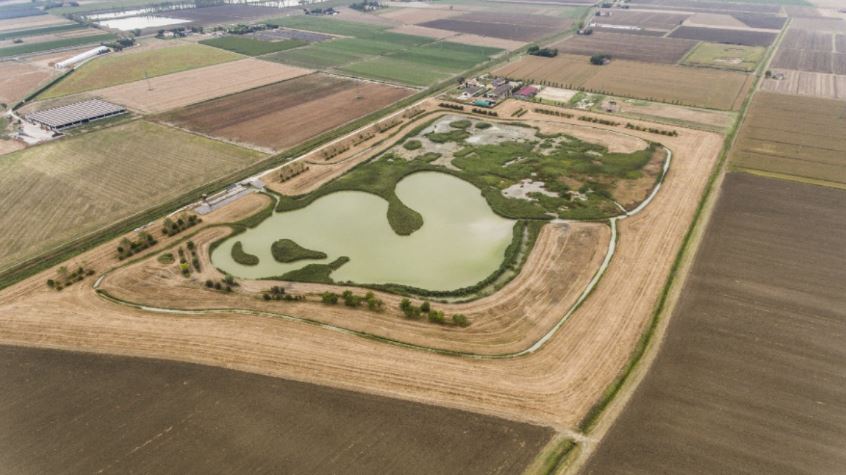
The CBRO purchased an area with the objective of managing both biodiversity and the resilience to natural hazards. The CBRO used EU-funding to finance the ecologically restoration of the area. Despite the financial supports envisioned a 20 years period, the CBRO decided not to change the land use destination of the area after the end of the period. This ensures a longstanding provision of environmental public goods, beyond the fixed policy terms. The case study is a successful example of a land tenure approach to environmental management, carried out by a collective/public association with funding from the EU. It is a small basin representative of the humid environments once present in the Ravenna plain, in an area with farms and factories between canals, after more than a couple of centuries of incessant reclamation. It is located in an interfluvial zone formed by more or less recent alluvial deposits, the site is characterised..

Objectives

  • Biodiversity and resilience to natural hazards

Public Goods

Landscape and scenery
(Farmland) biodiversity
Resilience to natural hazards
Rewilding of detention basin in Massa Lombarda

Problem description

To conjugate the need of managing natural hazard (flood) around Conselice, and to re-establish many local species that have been driven away from their habitat, the consortium has decided to purchase private land for public objectives and used EU funds to ecologically restore the area.