Category Archives: Users

pérdida alimentos

The European Commission creates a platform to fight food losses and waste

The European Commission has launched a European Platform on Food Losses and Food Waste (FLW), which is made up of 70 organizations, public and private, with the general objective of increasing cooperation to avoid food waste.

Because every year, about 1.3 billion tons of food is wasted (García Carretero, 2016), while almost one billion people do not have access to food and are dying of hunger in the world (a situation that has worsened with the current pandemic situation).
pérdida alimentos

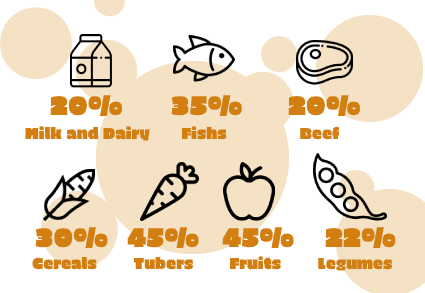
Foods that are most wasted.

It includes the member states, the Committee of the Regions, the European Economic and Social Committee, FAO, the Organization for Economic Cooperation and Development (OECD), the United Nations Environment Program and a list of 37 organizations selected by the EC.

Its objective is to support all stakeholders in defining the necessary measures to avoid food waste; share best practices; and evaluate the progress made over time in reducing food waste; and intersectoral cooperation.

 The first meeting of the European Platform on Food Loss and Food Waste will take place on 29th November in Brussels.
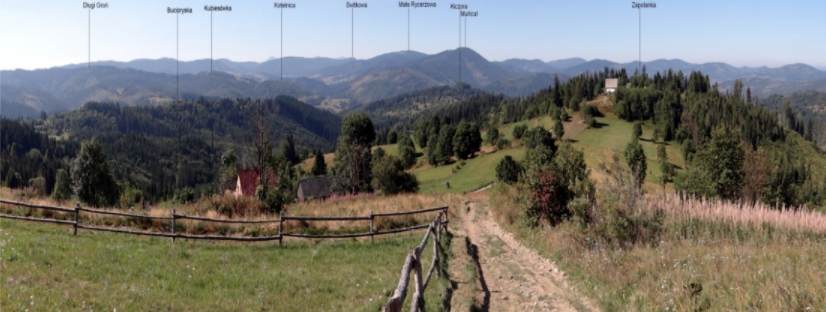
solutions can enhance water quality

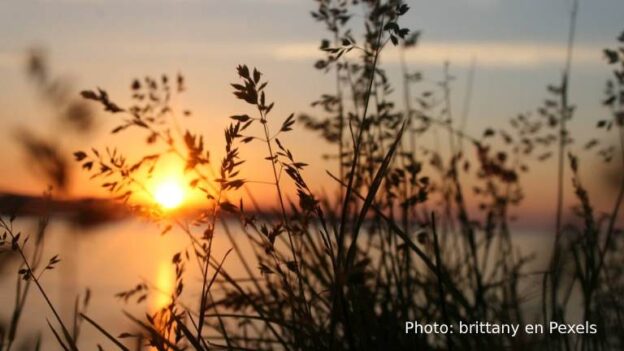
Solutions can enhance water quality!

Today on the CONSOLE website, we want to share more experiences from the case studies. In this case: Solutions can improve water quality!

Zapolanka, Beskid Żywiecki Source: fot. Jerzy Opioła CC-BY-SA-3.0

If you like to know more, more details about the rest of case studies clicking here.

Improved Solutions

D1.2 Identification of potential improved solutions

We have just uploaded a new deliverable to the CONSOLE project website that we think will be very useful for all interested parties and even projects with similar characteristics. (D1.2 Indentification of potential improved solutions).

Then, this deliverable describes the activities and the results developed in the task 1.2 “Stakeholder co-construction of potential improved solutions”. The objective is to identify the most promising solutions able to improve the design of contracts for agri-environmental-climate public goods (AECPGs) in different case studies and  in the EU as a whole.

The activities carried out involved a survey among partners, including selected stakeholders, and a workshop with a broad participation of stakeholders.

Several cases were identified that attracted a wide attention by partners from many countries. Three main AECPGs (carbon sequestration, biodiversity, water quality) were mostly confirmed as of high or very high importance in most cases.

In addition, the further discussion allowed to identify implications for the upcoming WPs. A general message is the high interest for result-based mechanisms, but also the importance of considering hybrid solutions.


Download the deliverable

You can download the deliverable by clicking the button

Case Study: Participation of private landowners to the ecological restoration of the Pond area Midden-Limburg through a close participation of private and public landowners and a triple E- approach in the 3watEr project.

Summary

10 private landowners set up a specific association OVML vzw (Ontwikkeling Vijvergebied Midden-Limburg vzw) for participating together to a Life+ project (3watEr project) and ensuring collective implementation on the basis of voluntary agreements by private parties and an integrated management plan.

Objectives

The Triple E Pond area M-L project aimed to conserve or restore the following species and habitats of Community importance in the Natura 2000 network site ‘Vijvergebied Midden-Limburg’ (‘Pond area M-L’): bittern (Botaurus stellaris); tree frog (Hyla arborea); ‘Oligotrophic waters…’ (3120), ‘Oligotrophic to mesotrophic standing waters…’ (3130), ‘Northern Atlantic wet heaths with Erica tetralix’ (4010) and European dry heaths (4030). The project aimed to secure the ongoing participation of private landowners and other stakeholders in habitat management, to establish a sustainable basis for the conservation of species and habitats by enhancing synergies between Ecology, Education and the local Economy (“triple E-approach”), to enhance public awareness of Natura 2000 and to demonstrate best practices for involving private landowners as partners in the management of Natura 2000 sites. Private contracts for implementation of the LIFE project; integrated nature management plan for the implementation of the nature management goals.

Public Goods

Recreational access /
improvements to physical
and mental health
Landscape and scenery
(Farmland) biodiversity
3watEr project.

Problem description

Private landowners were not structured to realize nature management projects, as this until 2014 was rather a monopoly of nature NGO’s in Flanders. As in the Midden-Limburg area, private landownership was crucial to realizing specific nature management objectives, 10 local landowners took the initiative to start a Life+ project with other stakeholders. For doing so they created a private association (OVML vzw) assuming a common partnership in the Life+ project as associated beneficiary of the project. Private contracts were signed between OVML vzw and each of the 10 landowners for the further implementation of the LIFE project, also through an integrated nature management plan.

EU fight against climate change

EU fight against Climate Change

There is no doubt that Climate Change is changing the way of life of humanity. The last two decades have seen the warmest years, which are causing the most extreme meteorological phenomena (floods, forest fires, heat waves, etc.); and causing irreversible changes in many ecosystems, the loss of biodiversity and the decrease in the production of many crops.

For this reason, climate change is a challenge that requires a response from the European Union (EU), as demonstrated by being one of the signatories of the Paris Agreement, whose objective was to limit global warming to below 2 °C and make efforts to limit it to 1.5 ° C.

What is the EU doing in the face of climate change?

As we have been announced in subsequent publications, the EU has developed a series of measures and establishes objectives such as:

  1. Reduce greenhouse gas emissions (20% compared to 1990);
  2. Increase the production of renewable energy;
  3. Improves energy efficiency.

And to achieve this, the EU has developed (and adapted to the realities that were emerging) the EU emissions trading system (ETS), to reduce Greenhouse Gas emissions, of which the primary sector is a part.

Goals for 2030

In 2014 the EU agreed to the 2030 climate and energy framework, where it commits to reducing greenhouse gas emissions by at least 40% (compared to 1990)

European Council on COVID-19 and Climate Change

On October 15th, the European Council on COVID-19 and Climate Change was held with the aim of evaluating the current epidemiological situation and analysing its position on Climate Change.

At this meeting, it was agreed to increase ambition for the next decade, updating its climate and energy policy framework, and setting the goal of reducing emissions by 55% in 2030.