Category Archives: Users

The secrets of the success of the CONSOLE website

The secrets of the success of the CONSOLE website

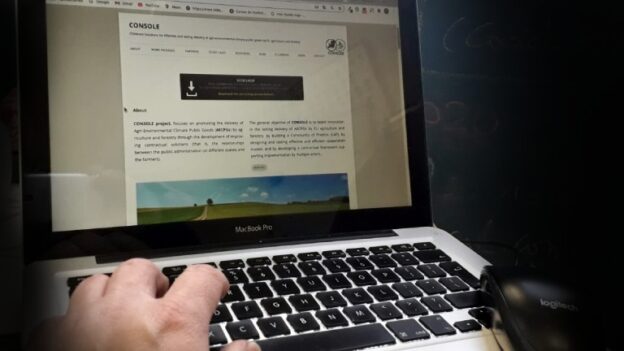
This time on the CONSOLE project blog we want to tell you the secrets of the website’s success in the dissemination and communication process.

The CONSOLE project website is framed in Work Package 6 (dissemination and outreach) and its main objective was to enhance the impact of the project towards Public Administrations, stakeholders (farmers, agricultural associations, research groups, etc.) and society in general.

A problem arose since traditionally in research projects (national, European and non-EU), the web page appeared as a static element where only the composition of the research groups that were part of the project, of the study areas that were included, and relevant documentation such as deliverables.

Potential stakeholders do not have the ability to guess that the project exists or where they can find information. Therefore, it is mandatory to publicize the work that is being developed through digital channels (Internet).

There was no doubt that we should resort to implementing a digital marketing strategy based on offering quality content.

We got to work

The first thing we decided to do is create a web page that, due to its own structure, would allow us to position ourselves in the main Internet search engines, such as Google. To do this, we develop the web platform with a simple code that will allow fast loading. It is recommended that web pages load in search engines in less than three seconds.

Another key to having a presence in the first searches of users is to offer quality content. And to carry it out, a publication calendar, which has changed according to the tastes of the users.

What better way than to publicize this content than through social media (facebook, twitter, LinkedIn). It is essential to create profiles on the main social networks. Each social network has a specific audience, so we thought about attacking as many audiences as possible: Facebook, Twitter and LinkedIn were the chosen social networks. What’s more, we developed a plugin so that blog posts will be published directly on social media (after a review process to avoid hackers).

Other tools were the creation of an e-newsletter where users could register; Email marketing strategies, which have worked perfectly in the call for meetings; leaflet development, etc.

A restricted area

We have commented that the CONSOLE project website must be a page with life. That is, it has to be managed by both users and project partners.

In the second case, a private area was developed where members could access private information, such as the Office templates used for the various presentations. Potentially, this area is prepared to install internal communication elements between partners.

Guaranteed success

Success was guaranteed. Since its birth, the number of visits has skyrocketed. Through the use of web analytics, we have been able to know which are the preferred contents by users, at what time of day they visit us, the number of visits by localities (countries, regions and cities), etc.

Once again, technology has democratized research, making it reach everyone in a fairly simple way. For this reason, we must encourage all research projects to be accompanied by a digital marketing strategy, rather than a simple website or profiles on social networks in which we publish in a timely manner.

Download

And so that you can see our secret, we encourage you to download our deliverable 6.1., Just by clicking on the button.
If you want additional information about the CONSOLE project, do not hesitate to register for our newsletter.

Eco-grazing - Grazing for ecological grasslands

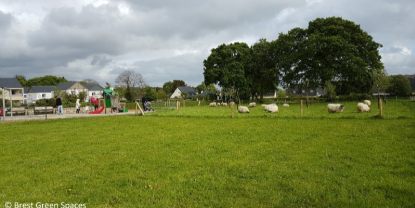
Eco-grazing – Grazing for ecological grasslands maintenance in the green areas of Brest Metropole

Summary

The Head of Green Spaces of Brest Metropole has chosen to entrust the management of the mowing of some of their green spaces to an eco-grazing service proposed by a breeder with a part of his flock of Scottish Black Face-bred sheep whose production (lamb meat) is subsequently sold (not cull or amenity animals as classically done). Eco-grazing is more expensive than conventional mowing, but has been chosen for the many environmental services that result (reducing GHG emissions, reducing noise, social link, local agriculture, invasive plant management, favouring mellow-flowering plants).

Objectives

  • Decrease in carbon footprint (from 2 to 8 mower interventions to max passage with a lighter machine)
  • Noise reduction
  • Social link in neighborhoods
  • Meat production from local urban agriculture
  • Biodiversity, invasive plants management
  • Alternative approach to thermal and chemical tools

Public Goods

Climate regulation greenhouse gas emissions
Landscape and scenery
(Farmland) biodiversity

Problem description

Brest Metropole used to manage extensive meadows using the mower and other thermal tools. In order to implement greener management of these grasslands, the Head of Green Spaces took the initiative to introduce eco-grazing, which was more expensive than previously done. A breeder responded to the call for tender by proposing to set up eco-grazing as part of his organic lamb production, to ensure the maintenance of meadows and to provide the desired environmental services.

Report on clustering with other projects-draft

Report on clustering with other projects

At the end of last year, the partners of the CONSOLE project published on our website a deliverable (7.2.) entitled report grouping with other projects.

This deliverable provided information on the coordination with sister projects financed under topic RUR03. In particular, it tried to list the actions carried out during the first six months to promote coordination and the main points agreed upon with the other sister projects.

 In the introduction, the grouping activities with other projects financed under the same theme were listed, such as:

  1.  The first contacts between project coordinators and facilitation of connections between partners working in the same country;
  2.  Update on deliverables and planned activities;
  3.  Reciprocal participation of the coordinators in the ABs of the other projects;
  4.  Joint dissemination activities;
  5.  Connect and disseminate information through the website and social media.

 Therefore, this particular document lists the actions taken during the first six months of the project activities to establish contacts and foster coordination with the EFFECTS and CONTRACTS2.0 projects.

 In short, consulting this document is highly recommended for the activities and coordination strategies developed to support coordination between projects are listed, and which may be useful both to provide general information on those activities, and to apply the subsequent actions or projects models.


Download

You can download the deliverable 7.2. by clicking the button. And if you want to receive more information about the CONSOLE project, you only just have to sign up for our newsletter.

Forest Bank – a forest conservation program in Indiana and Virginia, US

Forest Bank – a forest conservation program in Indiana and Virginia, US

Summary

Private forest owners convey both land development and timber rights to a quasifinancial institution, Forest Bank, in exchange for guaranteed annual payments, the value of which is based on the landowner’s standing timber. The Forest Bank protects valuable habitats and harvests timber using environmentally sound methods. The bank recoups payments made to the landowners, plus an administration fee, through timber sales as prescribed in a management plan that has been accepted by both parties. The owner gets access to annual income without need to liquidate his/her forest assets and compromise conservation values.
The Forest Bank is based on market incentives and landowner preferences. The owner can choose between a fixed-term (30 yrs) and permanent (99 yrs) contract.

Objectives

  • Preservation of biodiversity (valuable habitats and species)
  • Ecologically sound forest management that yields reasonable economic return to landowners
  • Prevention of erosion and protection of water quality
  • Economic viability of local communities

Public Goods

Rural viability
Water viability
Climate regulation – carbon storage
Landscape and scenery
Soil quality (and health)
(Farmland) biodiversity
Resilience to natural hazards

Problem description

The Forest Bank scheme was developed in the late 1990s by The Nature Conservancy (TNC), the largest conservation organization in the United States. The motivation for the novel contract solution was that protection of forests was too slow because acquiring environmentally valuable areas from private landowners required significant amounts of capital that was not usually available for conservation purposes. Working the standard way – preserving nature and protecting biodiversity by buying smaller parcels of land – mostly resulted in fragmented conservation areas that had limited environmental impact; they were not suitable for many imperiled species that required larger natural habitats or for watershed management that required landscape level planning and actions. Theacquired lands were often also fairly disconnected from other natural lands. TNC experts recognized that conservation efforts should be redirected to account for limited amount of capital, landscape level requirements, and a new form of integration of economic and ecological objectives that accounts for landowner preferences and viability of local communities. They developed an innovative contract solution, Forest Bank, which i) addresses conservation priorities and local economic needs simultaneously, ii) requires less initial capital because it is based on leases and conservation easements and accounts for landowner preferences, and iii) enables operating at the scale of landscapes and watersheds. The arrangement was named Forest Bank since the underlying idea was that a trustworthy institution holds and manages the tracts of forestland “deposited” by many small holders, then pays these owners a guaranteed rate of return on the appraised value of their timber assets, much as a commercial bank pays interest to people on their savings deposits. The Forest Bank is only available in priority ecological and environmental areas. These are often adjacent to national or state forests and parks, or other existing conservation and recreational areas. An important goal of the Forest Bank program is to establish ecological buffer zones around these areas and ecological corridors between them.

The Community of Practice of the CONSOLE project

The Community of Practice of the CONSOLE project

Definition

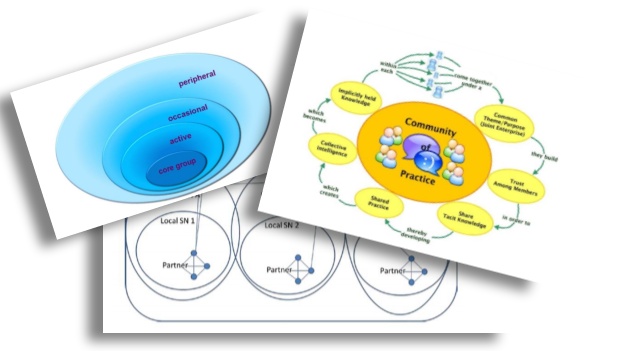
A Community of Practice (CoP) is a group of people who share a common concern or passion, a set of problems, or an interest in an issue and who come together to meet individual and group goals.

The goal of the CoP is to share best practices and create new knowledge to promote mastery of professional practice. Continuous interaction is an important part of this.

What is the origin of community of practice?

Cognitive anthropologists Jean Lave and Etienne Wenger coined the term “community of practice” when studying, learning as a model of learning, a term referring to the community that acts as a living curriculum. Once the concept was articulated, researchers began to see communities everywhere, even when there was no formal system of learning.

Characteristics of Communities of Practice

We must be careful with the meaning “community” since not all have the same objective. For example, a neighbourhood is known as a community, but it does not have the following characteristics:

Domain. A community of practice is not simply a club of friends or a network of connections between people. It has an identity defined by a domain of shared interest. Therefore, membership implies a commitment to the domain and, therefore, a shared competence that distinguishes members from other people.

Community. By pursuing their interest in their domain, members participate in activities and actions jointly, also sharing information. Therefore, they build relationships with each other.

Practice. A CoP doesn’t just share interests (for example, a group of people who meet on Sundays to watch football or rugby). Members of a CoP are practitioners. They develop a repertoire of resources (experiences, tools, etc.), ways of tackling recurring problems, and so on.

The CoP of the CONSOLE project

The Community of Practice (CoP) in CONSOLE project is expected to play a key role in driving innovation in the effective and durable delivery of Agri-environmental climate public goods (AECPG). The CONSOLE CoP will be organized around professionals with experience in the provision of AECPG and those interested in it, and will be nurtured throughout the life of the project.

Therefore, the CONSOLE CoP is intended to facilitate knowledge exchange and mutual learning, mainly through virtual contacts. Participation in the CoP is based on the principle of sharing and reciprocity. A central objective of these guidelines is to ensure sound management and facilitation of the CoP of all CONSOLE partners in order to optimize the input of CoP members in project activities. Members within a national or local CONSOLE CoP are:

  1. CONSOLE partners;
  2. Practitioners, mainly farmers and foresters, who practice test and implement the contractual models, and
  3. Experts, who may have specific interventions at the CoP.

A vibrant CoP with the active participation of its members is crucial for the evaluation and testing of improved and novel voluntary measures for the delivery of AECPG. For each of the CONSOLE countries, a national contact person is designated to assume the role of national focal points for CoP activities in their country and serve as the CoP facilitator. These facilitators are responsible for ensuring participation throughout the various project tasks foreseen in various WPs and for overcoming possible language barriers. The national contact person can be supported by other CONSOLE partners in their country for local activities. At the local level, the CoP benefits from the existing contacts of CONSOLE partners with professionals, including experts interviewed for the analysis of the case studies within WP2.

Download

Would you like to have more information about the Community of Practice of the CONSOLE project? Well, you just have to click the button

Cooperative rice production in coastal wetlands in Southern Spain

Cooperative rice production in coastal wetlands in Southern Spain

Summary

A value-chain related contract solution, where rice with higher standards is produced (integrated production of selected varieties). In the case study, rice producers are associated and work together to produce rice in partial and full organic production of high standards.

Objectives

The contract between the rice producers and the association (Arrozua) leads to a higher provision of the following public goods:
− Landscape and scenery (preservation of managed wetland)
− Biodiversity: The Arrozua program requires a limitation of agro-chemicals
applied and maintenance of flooding to preserve biodiversity of migrating birds
from Africa to Europe,
− Rural viability and vitality (secure economic viability of the farmers in the
Doñana region through the sale of rice with fixed prices).

  1. Preserve coastal wetland and secure biodiversity conservation
  2. Secure economic viability of the farmers in the Donana region
  3. Secure high production standards according to consumer preferences.

Public Goods

Rural viability and vitality
Quality viability and vitality
Landscape and scenery
Cultural heritage
(Farmland) biodiversity
Resilience to natural hazards
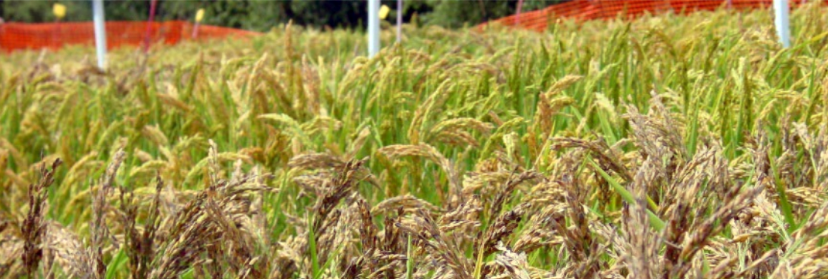
Rice production integrated into the value chain by the Arrozua cooperative. Source: Arrozua cooperative, 2019

Problem description

The sustainability of rice production in coastal wetlands is jeopardised by four main threats: water scarcity, decrease in financial support from the CAP, competition for water to preserve biodiversity, and future climate projections.
Current policies are insufficient in response to these kinds of threats and concerns, since they do not consider collective action or time scale. Most local and regional actors are only concerned about the three first threats, and consider the need to deal with climate change as very low priority. In contrast, this last threat is the main focus of international actors.
The high degree of collaboration between producers could be sufficiently important to define new collective action policies and contract solutions to preserve biodiversity. It will be important to incorporate public opinion into the processes of developing contract solutions, since the public opinion is fundamental in the area of the case study.