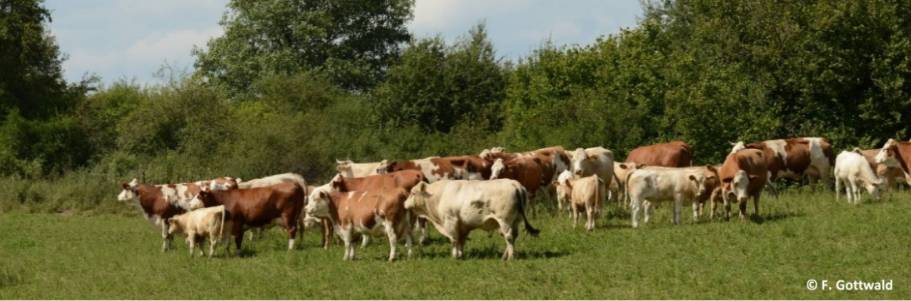
The initiative called “Farming for species diversity (Landwirtschaft für Artenvielfalt)” aims to increase the diversity of wild flora and fauna on organic farms. A result-oriented approach with participation of the value chain is pursued. In Mecklenburg-Western Pomerania the WWF Germany and the federation of organic farming named Biopark have started the initiative together with the retailer EDEKA. A new standard going beyond the requirements for the organic certification has been developed with scientific support. The nature protection certification is based on a credit point system with a broad range of over 100 measures. Its central element is a catalogue of measures with credits allocated to each of them. Together with a specialised nature protection advisor, the participating farmers choose the measures that are the most suitable and can be best integrated into their agricultural production. Factsheets provide detailed information on the implementation of the measures, suitable locations and potential indicator species. The whole farm with all its land and the surrounding landscape elements is eligible. If the farmer reaches a minimum of credit points, he gets a supplement for selected products (pork, beef, lamb, and potatoes). The farmer is compensated for his nature protection efforts through the higher priced premium organic product sold with a particular label. The consumers actively support species diversity by purchasing these products.
Objectives
Increase of the diversity of wild flora and fauna in agricultural landscapes;
Establish a nature protection certificate for organic farms;
Improve the market opportunities for selected organic products.
Public Goods
(Farmland) biodiversity
Quality and security of products
Rural viability and vitality
Problem description
The starting point for this project was the observed decrease of the biological diversity on farmland and in agriculture landscapes. In principle organic farming provides an excellent basis for a high species diversity of wild animals and plants. But also in organic farming the increasing economic pressure leads to intensification and this goes along with negative effects on species diversity.
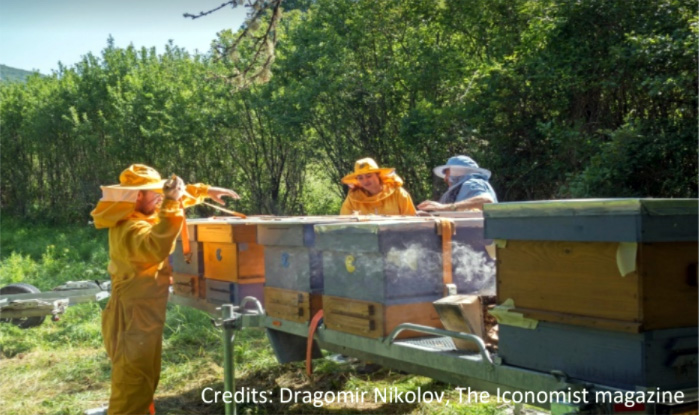
The contract is ongoing since 2015 and includes on one hand collective contract between the farmers, and on the other – a contract with the distributor of the honey – “Harmonica” (it is also the name of the brand for natural, eco-friendly products). It also has the features of a value-chain contract, given that the honey and honey products go from the farmers to the processor (a small processing plant for organic honey) and distributor (“Harmonica”). The farmers within the organization are 30 at the moment and are situated in Southeastern and Northwest Bulgaria within the natural reserves of the Stara Planina Mountain. The honeybee products are distributed as high-quality, pesticide free and eco- friendly products with responsibility for the bees and the ecosystems. The contract terms doesn’t include specific amount of honey that should be delivered to Harmonica, but it is specified on a yearly basis. The payments are dependable on the type of honey and are between 6.50-11 euro per kilogram of processed honey.
Objectives
Conservation of biodiversity by producing honey in environmentally safe way in mountain sites
Popularization of Bulgarian honey and honey products with high quality and ecofriendly practices
Collective initiative for encouraging Bulgarian farmers to stay in business
Public Goods
(Farmland) biodiversity
Quality and security of products
Farm animal health and wellfare
Problem description
The Bulgarian honey is mainly targeted for export for other countries. The honey however is classified as one with very high qualities, but unfortunately the mass consumption (due to lower prices) is of foreign imported honey and honey products. Also, in the last several years the share of poisoned bees due to agricultural activities is rising, putting some pressure on their population and therefore on the ecosystem functioning. The goal of this collective action was to encourage the consumption of premium natural honey which has positive impact on the local biodiversity, security and quality of products, keeping beehives far from industrialized areas and those with high pesticide risks.
On April 6th 2021, the Second Workshop of the CONSOLE Project was held “Strategy for an effective and lasting provision of Agri-environmental and climatic goods by the European agricultural sector” organized, jointly, by the three Spanish entities participating in the project: Evenor-Tech, Universidad Politécnica de Madrid and ASAJA-Sevilla.
The CONSOLE project (www.console-project.eu) is a Horizon 2020 project funded by the European Commission (GA 817949) and with a duration of 36 months, made up of 24 institutions from 13 European countries. The main purpose of the project is to design new voluntary measures for the agricultural sector that benefit them economically and provide Agri-environmental goods to society.
The event was participatory with a total of 15 entities from public and private organizations representing the national territory[1] .
After a general introduction to the conference and its contents, carried out by Francisco José Blanco Velázquez (Evenor-Tech), the program proposed in the agenda was followed, with a presentation of the objectives, scope and methodologies of the CONSOLE project carried out carried out by José Fernando Robles (ASAJA – Seville).
Subsequently, Dr. Ana Luisa Iglesias Picazo (Universidad Politécnica de Madrid) responded with the answers, why do we want these solutions? And how do we execute them?
Dr. Ana Iglesias clearly defined to the attendees that the objective of the solutions is to achieve a series of Agri-environmental goods of interest to the farmer and of common interest; and that their relevance was defined and explained one by one.
Next, and to answer the second question, the strategies and measures to achieve the positive effects on the environment, both in crops and in rural society were explained. And this is done through contractual relationships, which can be based on results (for example, the accounting of existing birds or insects in fields that are cultivated with a specific management); contracts based on collective solutions (farmers coming together to carry out a common action); contracts based on the value chain (such as the sale price of a good produced with certain management, which also offers positive environmental effects) and that involve various links in the chain; and finally, contracts based on land tenure.
Subsequently, Francisco José Blanco – Velázquez presented the representative case studies carried out in Europe. In the national case, it was previously decided to present two of the four case studies developed in the CONSOLE project.
The first of these is the production of organic vine in wineries in the Rivera del Duero, presented by Dra. Ana Luisa Iglesias Picazo (Universidad Politécnica de Madrid); while the second is carried out in Andalusian olive groves of integrated production in Andalusia, which was presented by Dr. María Anaya Romero (Evenor-Tech). In both cases, the benefits of the measures taken were verified.
The case study in organic vineyards
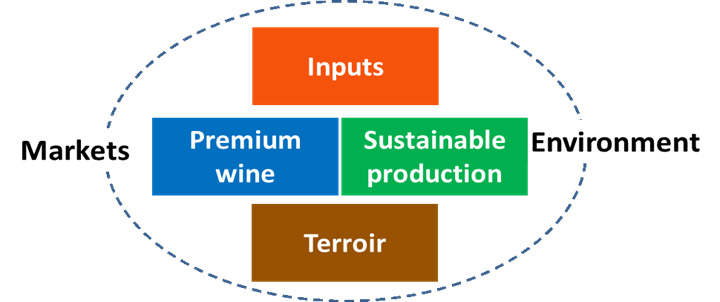
The vineyard contract solution was related to a value chain of grapes (Verdejo and Sauvignon Blanc) produced ecologically by the Herederos del Marqués de Riscal SA winery, in Rueda. The winery – in January 2020 -, contracts the supply of organic grapes to about one hundred farmers, linked to a specific labeling and an advertising campaign in the national and international market, enhancing the branding of the winery. This is causing the model to be exported to other areas to promote the market.
The production framework in the case study
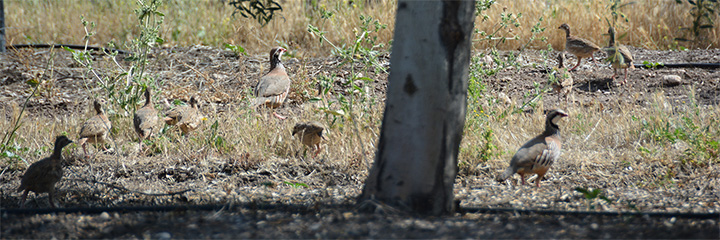
Among the Agri-environmental goods pursued, the [1] increase in rural viability and vitality stands out; since farmers are aware of social and environmental sustainability. In addition, [2] the improvement of the quality – significant – of the products, since they are wines without residues; [3] an increase in both soil and bird biodiversity; and [4] the landscape, which is favoured by agritourism.
It should be noted that the success lies in the close collaboration between the farmers and the consultants, which in addition to being free and can be exported to other types of production.
The case study of an integrated production olive grove
The main objective of integrated production is to reduce negative impacts on soil and water quality; as well as avoiding soil erosion and contamination on olive groves in Andalusia.
To do this, among the objectives of ASAJA-Sevilla and Evenor-Tech was to demonstrate integrated production as a type of contract in the value chain mitigating climate change, developing – also – a monitoring system for soil organic carbon according to management practices. On the other hand, the determination of this organic carbon Earth observation techniques and through the use of simulations predictive models.
And to achieve this, soil organic carbon databases from a period prior to the beginning of integrated production in Andalusia (1990-2000) were analysed. These geodatabases were developed by REDIAM and processed by Evenor-Tech in previous projects, such as Carbosoil’s Decision Support System (DSS), which allows evaluating the carbon sequestration capacity of the soil. Therefore, we started from the information from a database of more than 1,100 soil profiles in which all the information was harmonized and standardized in different soil depths (0 – 25 cm, 25 – 50 cm, and 50 – 75 cm) to have knowledge of carbon sequestration for each type of soil and its use. Further, the information from predictive models of sequestration and emission of soil organic carbon developed in certain commercial farms provided by the company TEPRO and in specific crops (wheat, corn, olive groves, orange and almond trees) and at different depths without taking into account the driving. Based on the processing of this information, the case study was developed, trying to find out on this occasion how the type of management can affect the regulation of carbon content in soils.
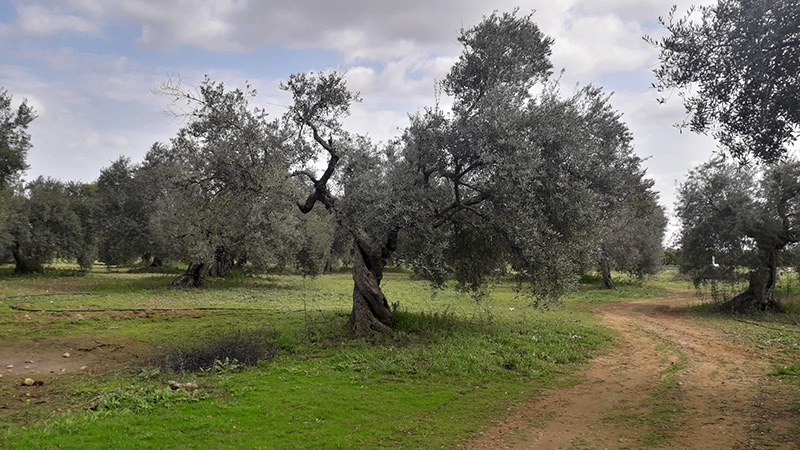
Olive grove in Andalusia
The experimental design was carried out on farms under traditional, intensive and super-intensive management, and considering representativeness of soils, climate and geomorphology. For this, 55 olive grove plots in integrated production located in different natural regions of the province of Seville were selected, from the information provided by ASAJA-Sevilla.
The preliminary results obtained in the 55 olive grove plots in integrated production, show that the organic carbon of the soil in olive tree crops under integrated production and different types of soils, is significantly higher compared to other types of management carried out previously. The next results that will come to light at the end of 2021, will argue a system for monitoring, management practices with earth observation techniques for the evaluation of carbon sequestration in soils.
As a participatory activity, attendees completed an online survey at the same time where the main strengths and weaknesses of the four types of contractual relationships analysed in the CONSOLE project and their relationship with Agri-environmental goods were discussed together. In addition, the participants were able to give their point of view on a hypothetical contractual relationship and its potential implementation at the local level. It was highlighted by the attendees that in order to design and facilitate the implementation of this type of voluntary measures, bottom-up participation and co-development with farmers is key to the adoption of these measures. The relationship between the responses obtained during the day and the information from the interviews with farmers that are being carried out will be the preliminary step for the design of future voluntary measures that guarantee the economic viability of the rural world, the attraction of new generations of farmers to combat depopulation and the provision of agri-environmental goods to improve environmental and human health.
In this blog post on the CONSOLE project website, we find it of interest to report on the Activity Report of 2020 from our partner ELO.
Obviously, this report is heavily influenced by the current pandemic situation in which we find ourselves immersed since last year, and the need “now more than ever” to strengthen relations with nature especially with the aim of building “a sustainable and resistant link with our planet.”
ELO’s work highlighted in the report is to help actively work at ground level, and alongside landowners to improve ecosystems in Europe (and beyond).
To achieve these goals, the report highlights Wildlife Estates, a project aimed at developing a network of farms that voluntarily agrees to adhere to the philosophy of wildlife and a sustainable one of the lands. This project has shown that private landowners play a vital role in promoting and protecting biodiversity and regenerating our rural areas.
What will we find in the activity report?
The Activity Report has been developed in 9 detailed chapters that are described below:
The ELO family
In the first chapter it refers to the “ELO Family”, as an organisation capable of representing all rural entrepreneurs. ELO promotes a prosperous rural area, through private property rights, sustainable land use and profitable rural businesses.
Issues and Policies
This chapter narrates the role of ELO in the main strategies carried out in the European agricultural area, such as the Green Deal, the Common Agricultural Policy (PAC), the Farm to Fork strategy, the Biodiversity Strategy, Soil and Water Resources, Forestry, Climate Change, Carbon farming, access to land and property rights and its commitment to the immersion of farmers in Innovation and Digital Agriculture.
Projects carried out by ELO
On page 27 of the ELO Activities Report there is a list of at least 27 projects in which the organisation has participated throughout the year 2020. These projects vary in their objectives, from those oriented to water resources (AGRIWATER); to the social inclusion of people in the primary sector (FARMID); Agroforestry (land use where trees are grown in association with agricultural crops or livestock on the same land; AGFOSY); online training programme for rural women (REWARD); etc.
Of course, we must highlight the role of the CONSOLE project, where ELO participates in the co-design of the research and is the leader of the Work Package related to communications and dissemination.
Awards and honours
ELO’s great professional career has been recognized on numerous occasions. Chapter 4 shows us the recognitions for the year 2020, such as the European Bee Award, as a project aimed at protecting bees and pollinators in Europe; The Land and Soil Management Award, which rewards land use and soil management practices for mitigation of degradation, erosion, reduction of organic matter content, contamination and compaction; European Biodiversity Conference and Belleuropa Award at the European Parliament; Belgian Tree of the Year, in search of the most remarkable tree in Belgium.
Events (edit)
ELO has participated in numerous events throughout 2020 (mostly online), as you can see in chapter 5. Among those events, we can highlight the FFA2020 (Forum for the Future of Agriculture); the General Assemblies of ELO; the Conference on Biodiversity; the Dialogue on Sustainable Food and Agriculture; European tree of the year 2020; and the 2020 Innovation Conference.
Scientific Communications and Publications
ELO’s contributions in the field of communication are also numerous, highlighting its CountrySide Magazine, which for more than 26 years has given voice to rural landowners and managers. But it has also made contributions in other media that you can consult in the Annual Report.
Collaboration with the Institutions of the European Union
Likewise, ELO has developed other important activities over the past year, such as collaboration with the Institutions of the European Union; as is the case with the Intergroup “Biodiversity, Hunting, Countryside”, to bring together the perspectives of key rural actors when shaping the main political debates of the EU Green Deal.
Finally, the Annual Report refers to the partners who have collaborated during this year (chapter 8), as well as the perspectives of ELO for the coming years (chapter 9).
Download
If you want to download the ELO Annual Report, you just have to click on the button
Member states of the European Union are escalating their efforts to curb climate change by increasing reduction targets for greenhouse gas emissions. The bloc’s elected representatives have pledged, as part of the Green Deal, to further expedite the 2030 reduction by 50%, and aim to achieve carbon neutrality by 2050. Livestock production is a key contributor to the continent’s greenhouse gas emissions and a vital source of food. The sector currently faces the challenge of nourishing a growing world population, while reducing its greenhouse gas emissions. Better management of soil, grassland and manure has been proven to improve the efficiency of animal production systems and may be a cost effective strategy to mitigate emissions from livestock.
Project
The Walsh Scholarship is part of a joint research project between Teagasc, Johnstown Castle and the Department of Food Business and Development, Cork University Business School at University College Cork. The project is supported by the European research area network project “MELS”. The scholarship will focus on developing mathematical models and applying simulation/optimisation methods to develop strategies to reduce greenhouse gas emissions from livestock production and determine their cost effectiveness. The mitigation measures identified will be supplied to those responsible for developing national GHG inventories. The measures will also feed into the development of farm-scale tools, designed to support producers’ decision-making in relation to reducing greenhouse gas emissions from livestock production. The project will support more accurate reporting of livestock emissions at the farm and national level.
Award
The scholarship will commence on the 14th of June or as close as possible to this date and is full-time. The Walsh Scholarship funding is €24,000 per annum and includes University fees of up to a maximum of €6,000, and is tenable for 4 years. The scholar will be located in Teagasc, Johnstown Castle, Co. Wexford or Cork University Business School and registered with the University. She/he will work under the supervision of Prof. Thia Hennessy and Prof. Armagan Tarim in association with Teagasc supervisors (Dr Donal O’Brien and Dr Dominika Krol). Training modules will be provided by University College Cork.
The scholarship will commence on the 14th of June or as close as possible to this date and is full-time. The Walsh Scholarship funding is €24,000 per annum and includes University fees of up to a maximum of €6,000, and is tenable for 4 years. The scholar will be located in Teagasc, Johnstown Castle, Co. Wexford or Cork University Business School and registered with the University. She/he will work under the supervision of Prof. Thia Hennessy and Prof. Armagan Tarim in association with Teagasc supervisors (Dr Donal O’Brien and Dr Dominika Krol). Training modules will be provided by University College Cork.
Requirements
Applicants require a minimum of a 2.1 degree in an appropriate academic discipline (e.g., Agricultural Science, Economics, Environmental Science, Maths, Statistics, Operations Research, Computer Science). A Master’s degree or research experience would be an advantage. Applicants should have a good understanding of agriculture, the environment and/or mathematical modelling. Programming experience is desirable, but not essential. The successful candidate will be self-motivated and prepared to work as part of team or independently. A full driving licence, valid in Ireland, is also desirable. Candidates whose degree was not taught in English must meet the University’s minimum language requirement.
How to apply?
Submit an electronic copy of your Curriculum Vitae, with the names and contact details of two academics references, and a cover letter expressing your interest, simultaneously to:
Prof Thia Hennessy, Cork University Business School, Co. Cork, Republic of Ireland. Email: th***********@*cc.ie
Dr Donal M. O’Brien, Teagasc, Johnstown Castle, Co. Wexford, Republic of Ireland. Email: do***********@*****sc.ie (tel: +353 053 9171221)
Due to the fragmented nature of forest ownership, groups of private forest owners and managers (Forest Groups) have been established in Flanders (Belgium). These forest owner associations oversee voluntary co-operation between the large number of private forest owners and sometimes public forest managers. Their objective is implementation of improved and more coherent forest management practices. The 11 active Forest Groups in Flanders cover the whole territory and have almost 13.000 members (about 13% of all forest owners). The interests of the owners contracting membership are vested in the coordinated management of their forest parcels and the professional expertise and service they receive from the Forest Group. This represents i.a. administrative support, coaching and technical support, organization of joint wood sales, voluntary participation to projects or the setting up of combined management plans.
Objectives
Realization of afforestation and activation of forest compensation
Development of profitable resilient forests;
Achievement of conservation objectives in Natura 2000 areas;
Management of fragmented forests;
Promotion of neighborhood and play forests;
Support of local production and processing of a climate-friendly raw material;
Support the livability of the local timber sector;
Ensuring support in Flanders for sustainable multifunctional forest management;
Appreciating private forest owners for their social commitment;
Support not only private forest management, but also public forest
management.
Public Goods
(Farmland) biodiversityRecreational access / improvements to physical and mental healthAir quality
Landscape and sceneryRural viability and viability
Forest ownership in Flanders is very fragmented. Most forest owners often have very little knowledge of forest management and little trust in government handling as such. They do have faith in the Forest Groups. Within these Forest Groups, the aspects of trust and voluntary approach are predominant, giving the forest owner the necessary freedom of decision. They allow forest owners to incorporate the management of their forests in a larger project. Most owners are proud to be part of a process towards better forests. Many forest owners are also quite happy with the support they receive to manage the forests in a better way. In this sense, the Forest Groups act as promoters and facilitators of a global forest policy. Small forest owners, who have no obligation to produce a management plan, often have an ‘ad hoc’ management, using felling applications and permits. They are stimulated by the Forest Groups to participate in joint management plans.
We use cookies to ensure that we give you the best experience on our website. If you continue to use this site we will assume that you are happy with it.OkNo