Author Archives: EVENOR - TECH

Soil_ConservationDay

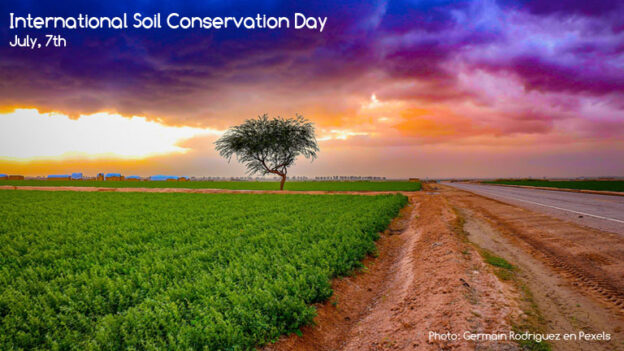
Soil Conservation Day

Why is it celebrated today?

The International Soil Conservation Day event has been commemorated since 1963; Three years earlier, on July 7, 1960, the American scientist Hugh Hammond Bennett (1881-1960) died. As director of the Soil Conservation Service, he managed to change the mentality of farmers, promoting soil conservation through the use of new techniques and forms of cultivation, which protected the soils and preserved their fertility.

PHOTOGRAPH BY STATE ARCHIVES OF NORTH CAROLINA. SOURCE: https://www.ourstate.com/

This distinguished scientist dedicated his entire life to demonstrating that caring for the soil is inextricably linked to its productive capacity and was a pioneer of sustainability, when this concept had not yet been invented. For this reason, on this very significant date their work, their example and their achievements are remembered, and they strive to continue conserving and protecting soils.

Problems affecting soils

You already know that soils are an essential resource for the maintenance and life of human beings. However, in our contradictions, we have mistreated him. Because soils receive large amounts of pollutants, whether they are liquid or solid and sometimes also gaseous. Sewage and crop runoff, industrial waste, toxic particles, plastics, garbage, etc. They contain substances that are harmful to the health of the living elements that fertilize these soils.

Among them, we can highlight agricultural activities, which generally use large amounts of chemical fertilizers, pesticides and herbicides; as well as plastic particles, which penetrate to the lower layers of the soil and cause significant damage to the intrinsic nature of the earth, ending its fertility.

Social awareness is essential to conserve and protect the soil

With the celebration of the International Soil Conservation Day, it is intended to achieve a greater awareness of the world population, when it comes to giving soil conservation the great importance it has for all living beings. Therefore, it is essentially and vitally important that all the inhabitants of the planet learn to care for and respect the environment in which we live. Being very clear that numerous actions such as the uncontrolled felling of trees, uncontrolled and aggressive burning or the continued and excessive use of manures and artificial fertilizers, can cause a high degree of erosion and with it an impoverishment of such a basic component of life as is the ground.

Wildlife Estates Label in Flanders

Wildlife Estates Label in Flanders

Summary

Estates and territories adhere on a voluntary basis. They commit to maintain and developing high standards of wildlife management, with emphasis on habitats. This involves all aspects of multifunctional estate management. They are assessed according to a scientific based method (www.wildlife-estates.eu), which has been adapted to national or regional specificities.
Aspects covered are:

  1. Level of stillness/tranquility/surveillance
  2. Existence of measures that help the sustainable balance between agriculture,
    silviculture, cinegenic management, pisciculture/fishing
  3. Natural, semi-natural and intensive hunting or fishing grounds
  4. Biodiversity surface
  5. Food availability
  6. Water availability
  7. Presence of restoration measures and improvements to habitat holding capacity for
    wildlife Presence of prey species
  8. Presence of valuable species of fauna
  9. Treatment and destination of venison
  10. Implication of local actors
  11. Conservation of cultural and historic heritage
  12. Communication program in the Flemish Region of Belgium, more than 8500 hectares have been labeled. Monitoring is part of the assessment and the label is awarded on a 5 years basis. After this period, management goals and achievements need to be re-evaluated and WE Charter commitments renewed.

Objectives

Participation in the WE Label takes place on a voluntary basis by landowners and managers to work on sustainable management, conservation of biodiversity and development of fauna and flora, based on their own integrated vision of ecological, economic and social functions. Wildlife Estates regularly communicates about best practices and optimal management techniques that are developed and applied by members. It also informs the general public about the importance of estates in ecological, economic and social terms.

Public Goods

(Farmland) biodiversity
Resilience to natural hazards
Soil quality (and health)
Landscape and scenery
Rural viability and vitality
Farm animal health and welfare
Recreational access / Improvements to physical and mental health
Cultural heritage
Cultural heritage
Wildlife Estates Label in Flanders

Problem description

Traditional multifunctional estates (landgoederen) and territories managed by hunting management associations (wildbeheereenheden) are major contributors to biodiversity in Flanders, although their action often is very private and not communicated at all.
This can only be achieved through the voluntary engagement of and intense cooperation between the many (mostly private) managers of the outlying areas such as farmers, estate managers, nature and forest managers, hunters, fishermen and others, all of whom are very important but often play an ignored role in preserving auna and flora. They form the most important link in the realization of sustainable rural development.
Where good results for biodiversity on private estates are already being measured, this is very often due to a well-balanced balance between the ecological, economic and social functions of management. The WE Label uncovers the quality of caring stewardship for the benefit of nature conservation to the outside world. The land managers who endorse the principles of the WE Label do so on a voluntary basis, not because it is imposed by the government.
It is their healthy, conservative attitude that is bearing fruit for biodiversity. Where good practices are used that consider both economic and ecological aspects, landowners and managers produce biodiversity, in other words: the natural support on which unique habitats and species can thrive. The added value that is offered here is enormous, also social. The WE Label wants to make this known and raise the expertise that comes with it as standard, so that many land managers can benefit from this expertise and refer to it.

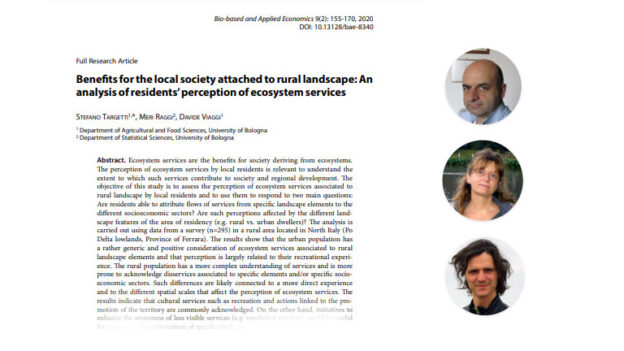
Benefits for the local society attached to rural landscape: An analysis of residents' perception of ecosystem services

Benefits for the local society attached to rural landscape: An analysis of residents’ perception of ecosystem services

Today we want to publish on the CONSOLE project blog, one of the most useful papers that can help both farmers and other related actors (stakeholders) to understand how to manage rural areas in a sustainable way.

It is a scientific publication of three colleagues from our project (Stefano Targetti, Mari Raggi and Davide Viaggi) who begin the text, adding the importance of correctly managing ecosystem services to contribute efficiently to society and regional development.

For example, and as the research points out, they improve employment opportunities, increase the population (remember that rural areas of Europe are depopulated), create cultural benefits, develop tourist and recreational activities, attract investments, offer added value to products, etc.

However, it is a challenge to understand both the economic and social processes that relate the landscape and the economic development of geographic territories.

And with that objective they have developed this study. These researchers have investigated the different perceptions of the benefits associated with the rural landscape in different groups of residents of a coastal region of northern Italy (Lowlands of the PO River Delta).

Obviously, we encourage you to read the scientific article to know the results of the research. However, we can tell you that the majority perception of the people surveyed value positively (from an economic point of view) the elements of the landscape and the local development actions carried out in them.

In addition, this magnificent research also shows you which types of landscapes (and landscape elements) are highly valued.

And downloading the article is as simple as clicking this button.

Download

And downloading the journal article is as simple as clicking this button.

Result-based Nature conservation Plan

Result-based Nature conservation Plan (RNP)

Summary

In the period 2014-2020, under the Austrian Agri-Environmental-Program ÖPUL, a sub- measure “Result-based Nature Conservation Plan (RNP)” has been integrated into the measure “Nature conservation”. In contrast to conventional ÖPUL measures, the RNP
defines environmental objectives to be reached as basis for 2nd Pillar payments, and not management measures. The approach allows farmers to make own decisions about management measures and implement them at their own discretion. The RNP represents a dual system of 1.) environmental area objectives, on the basis of which farmers primarily orientate their farming methods and 2.) control criteria, which are used primarily as a control instrument for the technical control service. Both types of environmental objectives are farm-individually developed by ecologists together with the farmers, and fixed in a farm-individual logbook, containing information on objectives, illustrations of species, maps of appearance, suggestions of management measures as well as a section for documentation of management measures and progress as regards the objectives.
Besides the documentation by the farmer, control of RNP control criteria is carried out by specially trained staff of the national control body (AMA).

Objectives

  • Results-oriented implementation of the ÖPUL conservation measure;
  • Definition of specific nature conservation area objectives (species and habitats) on the farm;
  • Increase farmers’ understanding of the needs and conservation of valuable species and habitat types;
  • Enabling decision-making autonomy and room for manoeuvre in the implementation of management measures;
  • Raising awareness of the objectives of the Habitats Directive, the Birds Directive and the Natura 2000 network, and knowledge expansion about the life requirements of the target species.

Public Goods

(Farmland) biodiversity
Result-based Nature conservation Plan

Problem description

“Classical” contractual nature conservation is predominantly designed to be action- oriented. Concrete management measures are defined on valuable areas by authorities in coordination with the farmers. The farmers are often not well informed about the protection objectives on the area and the expected results. This means that farmers do not necessarily understand why certain measures are taken and no process of learning can settle. In 2014 the first concept of the result-based nature conservation plan was developed and piloted. Here, the focus lies on the nature conservation objectives on the contractual areas. These objectives are developed together with the farmers. Management measures to reach objectives are not prescribed and can be determined by the farmers themselves. Besides reaching the environmental objectives, in this way the RNP intends to increase farmers’ flexibility, supports awareness building and the building of social capital.

Using natural flood management to achieve multiple environmental benefits in Wharfedale

Using natural flood management to achieve multiple environmental benefits in Wharfedale

Summary

Natural flood management (NFM) was one of the reasons for establishment of the Wharfedale CSFF network in 2017; it brought together 16 farmers to tackle issues across the catchment using NFM and other measures. Flooding happens several times a year in the catchment and there are long-term problems with soil loss and pollution; Storm Desmond in 2015 provided a North of England focus for action to address flooding.
A key aspect of this network was to bring together a group of neighbouring farmers and identify their priorities. The group has focused on key issues they want to tackle; some related to flood risk mitigation, but many others on topics including improving the value chain for their products, public goods such as habitat restoration and understanding and reducing their carbon footprints.

Objectives

  • Improvements in water quality, in particular reductions in sediment and phosphate throughout the catchment, from Natural Flood Management measures;
  • Increased biodiversity in blanket bog, upland heath and hay meadows;
  • Improvements in habitats for species, in particular wading birds;
  • Training to provide greater knowledge and understanding of flood risk reduction and to build a holistic view of the catchment

Public Goods

(Farmland) biodiversity
Water Qualiy
Water Qualiy
Landscape and scenery
Resilience to natural hazards
Cultural heritage
Cultural heritage
Rural viability and vitality
Using natural flood management to achieve multiple environmental benefits in Wharfedale

Problem description

The Wharfedale NFM CSFF network was funded through the CSFF Northern Flood round in 2017 as a response to the flooding in the North of England caused by Storm Desmond in December 2015.

Flood events happen in this area several times a year and there are longstanding issues such as sedimentation, soil loss and pollution levels in the Wharfe catchment. While the flooding itself is further downstream from where network members are based, there was a desire amongst farmers to use NFM measures to tackle these problems and work together collectively.

17 most relevant papers related to Agri-environmental Public Goods

17 most relevant papers related to Agri-environmental Public Goods

Today we present a recommendation made on social networks by the leader of the CONSOLE project, Davide Viaggi.

In volume 107 of the scientific journal “Land Use Policy”, published by the  ScienceDirect, has highlighted the 17 most relevant scientific articles related to the public goods provided by agriculture and forestry to design more efficient governance mechanisms.

And it is also noteworthy that it has been edited by Davide Viaggi, Meri Raggi, Anastasio J. Villanueva and Jochen Kantelhardt, which makes us happy for the proximity.

1.1        Provision of public goods by agriculture and forestry: Economics, policy and the way ahead

(Davide Viaggi, Meri Raggi, Anastasio J. Villanueva, Jochen Kantelhardt)

The objective of this initial journal article is to lay the foundations for this special issue on Public Goods in Agriculture and Forestry; offering a summary of the articles included in this volume of the publication and generating ideas for future publications.

Likewise, these authors point out to the need to investigate more deeply the micro decision-making mechanisms, the creation of value and the coordination between the actors.

1.2        Exploring the commodification of biodiversity using olive oil producers’ willingness to accept

(Melania Salazar-Ordóñez, Macario Rodríguez-Entrena, Anastasio J. Villanueva)

These researchers emphasize the need to create new innovative instruments to complement current schemes for the betterment of biodiversity; among which the commodification of biodiversity stands out. This research aims to estimate the compensation that farmers need to carry out environmentally friendly practices aimed at incorporating the provision of biodiversity in food production.

1.3        Drivers of farmers’ willingness to adopt extensive farming practices in a globally important bird area

(Mikołaj Czajkowski, Katarzyna Zagórska, Natalia Letki, Piotr Tryjanowski, Adam Wąs)

Agri-environmental schemes are also important tools of land use management policies in ecologically valuable river valleys. The researchers therefore use the case of Biebrza Marshes, a complex of wetlands and one of the largest wildlife refuges in Europe, which is located in northeast Poland.

1.4        Farmers’ perception of co-ordinating institutions in agri-environmental measures – The example of peatland management for the provision of public goods on a landscape scale

(Kati Häfner, Annette Piorr)

The authors assess how farmers perceive the various coordinating institutions as well as agricultural and farmer characteristics determine differences in perception. To do this, the authors apply a quantitative data analysis using a survey that includes a discrete choice experiment on the willingness of peatland farmers to participate in a hypothetical agri-environmental measure aimed at climate-friendly peatland management.

1.5         Private landowners’ preferences for trading forest landscape and recreational values: A choice experiment application in Kuusamo, Finland

(Liisa Tyrväinen, Erkki Mäntymaa, Artti Juutinen, Mikko Kurttila, Ville Ovaskainen)

This study focused on the possibilities of enhancing the scenic and recreational values ​​of private forests for nature tourism in Finland. More specifically, they studied the attitudes of forest owners and their willingness to participate in a Payments for Ecosystem Services (PES) initiative called Trade on Landscape Value and Recreation. In addition, the acceptability of forest management alternatives that underpin landscape qualities, the relative importance of different characteristics of the Recreational and Landscape Value Trade to landowners, and the magnitude of overall compensation claims from landowners were also investigated alternative models of Recreational and Landscape Value Trade.

1.6        Hedonic valuation of harmful algal bloom pollution: Why econometrics matters?

(Abdel Fawaz Osseni, Francois Bareille, Pierre Dupraz)

Harmful algal bloom (HAB) pollution is a major environmental threat in Brittany, affecting the well-being of the local population. The researchers estimated the willingness to pay (WTP) to reduce HAB contamination levels using the hedonic pricing method for the particular case of the rural Breton housing market between 2010 and 2012.

1.7        Importance of forest landscape quality for companies operating in nature tourism areas

(Erkki Mäntymaa, Liisa Tyrväinen, Artti Juutinen, Mikko Kurttila)

Researchers study entrepreneurs’ attitudes towards the importance of environmental comforts and evaluations of potential improvements in forest landscapes for their business under the proposed Payments for Ecosystem Services mechanism, called Trade in Landscape Value and Recreation.

1.8        Moving (back) to greener pastures? Social benefits and costs of climate forest planting in Norway

(Endre Kildal Iversen, Henrik Lindhjem, Jette Bredahl Jacobsen, Kristine Grimsrud)

Norway is considering a national afforestation program for greenhouse gas sequestration in recently abandoned semi-natural grasslands. However, the program may have negative impacts on the aesthetics of the landscape and biodiversity. Therefore, the researchers conducted an experimental nationwide election survey to estimate non-commercial values, combined with secondary data on program costs and other impacts, to derive the net social return on land-use scenarios.

1.9        Public goods in rural areas as endogenous drivers of income: Developing a framework for country landscape valuation

(Bazyli Czyżewski, Anna Matuszczak, Andrzej Czyżewski, Agnieszka Brelik)

Rural areas are where many environmental and cultural public goods occur, creating a country landscape. Its agroecological infrastructure offers things that people value directly, such as food, fiber and energy, but the market fails when it comes to valuing public goods. That’s why, indirect valuation methods are used, but these encounters many methodological problems. The objective of this study is to create a conceptual framework for the economic rent valuation method (ERV), which estimates the economic rent resulting from the random endogenous influences of public goods on the factors of production in rural areas.

1.10    Farmland abandonment, public goods and the CAP in a marginal area of ​​Italy

(Matteo Zavalloni, Riccardo D’Alberto, Meri Raggi, Davide Viaggi)

The abandonment of the land is affecting several areas of Europe and for some years the problem has become a political objective. However, the consequences of land abandonment are difficult to assess, since both agriculture and land abandonment are linked to social-environmental public goods, but the relationship between the provision of public goods and land use, as well as its social value, is not clear and is debated.

1.11    Assessment of real and perceived cost-effectiveness to inform agricultural diffuse pollution mitigation policies

(Francisco Alcon, María Dolores de-Miguel, José Miguel Martínez-Paz)

Diffuse water pollution is a major problem in many agroecosystems, especially in irrigated areas linked to ecosystems of high ecological value. Pollution reduction policies are often rejected by farmers because of their impact on farm profitability. Therefore, the objective of this publication is to design an evaluation procedure for an implementation program of agricultural measures aimed at mitigating diffuse pollution, combining the relative effectiveness between the measures with the perceived and real cost of the measures.

1.12    A fuzzy cognitive mapping approach for the assessment of public-goods governance in agricultural landscapes

(Stefano Targetti, Lena L. Schaller, Jochen Kantelhardt)

In this study, the researchers apply a participatory approach based on the Fuzzy Cognitive Mapping technique in evaluating different policy mechanisms, including improved monetary incentives and the potential for improved agricultural landscape governance design. This analysis specifically assesses the interactions between rural society, public goods and policies in different locally relevant economic and social settings (Marchfeld, an intensive agriculture case study area in eastern Austria).

1.13    From elite-driven to community-based governance mechanisms for the delivery of public goods from land management

(Tomáš Ratinger, Klára Čamská, Jaroslav Pražan, Miroslava Bavorová, Iva Vančurová)

Various non-governmental initiatives have emerged in the Czech Republic in recent years with the aim of organizing the provision of public goods; although they are usually initiated by activists and take forms such as foundations or trust funds, but sometimes they are presented as collective actions of communal interests. In this scientific article we present four cases of such efforts and show their common and contrasting characteristics in light of their relevance to local needs and their possible integration into the future framework of the CAP.

1.14    Policy instruments for environmental public goods: Interdependencies and hybridity

(KL Blackstock, P. Novo, A. Byg, R. Creaney, … KA Waylen)

Researchers point out to the need for a deeper exploration of the interplay between policy instruments and consequences for the management of public goods in agricultural and / or forest landscapes. Therefore, the researchers explored how policy instruments influence the mix of public goods provided by Scotland’s agricultural and forested areas, drawing on empirical and desktop research.

1.15    The legitimacy of result-oriented and action-oriented agri-environmental schemes: A comparison of farmers ‘and citizens’ perceptions

(Annukka Vainio, Annika Tienhaara, Emmi Haltia, Terho Hyvönen, … Eija Pouta)

In this research, the authors point out that perceptions of farmers and citizens about the legitimacy of current action-oriented Agri-environmental schemes and the proposed results-oriented ones (AES) are poorly understood. Therefore, this study analysed such perceptions in the context of Finnish citizens and farmers.

1.16    Vulnerability of British farms to post-Brexit subsidy removal, and implications for intensification, extensification and land sparing

(David Arnott, David R. Chadwick, Sophie Wynne-Jones, David L. Jones)

The UK’s exit (BREXIT) from the European Union will force the development of a new agricultural policy in the UK, which will likely see the removal of direct financial support to farmers. Therefore, in this study, combined data from agricultural surveys and rural payments were used to assess the degree of dependence on Pillar 1 payments, based on a sample of 24,492 (i.e. 70%) of the farms in Welsh.

1.17    Do differential payments for agri-environment schemes affect the environmental benefits? A case study in the North-Eastern Italy

(Fabio Bartolini, Daniele Vergamini, Davide Longhitano, Andrea Povellato)

Although promoting sustainable agricultural systems, maintaining biodiversity and establishing measures to counteract climate change are the clear objectives of the future Common Agricultural Policy (CAP); there is still uncertainty about its implementation. In this document, they estimated a composite indicator to track changes at the farm level and assess the impacts of Agri-environmental climate schemes (AECS) on change in management intensity.