Author Archives: EVENOR - TECH

We-change-crops-to-survive

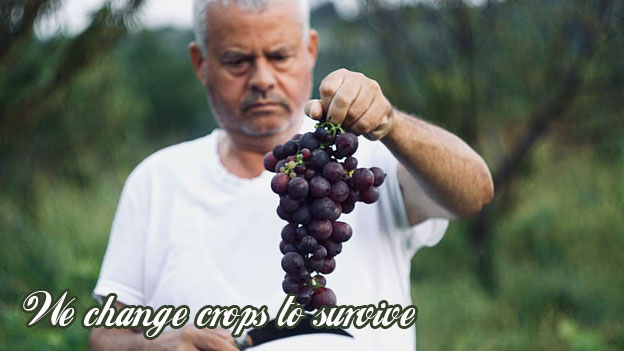
We change crops to survive

The agriculture sector is struggling with one of the biggest challenges in history.

The increase in temperatures (between 1.4 ºC and 3.9 ºC) as a direct consequence of the emission of greenhouse gases has begun to have a direct negative impact on plant and livestock species in Europe. Climate change is changing our agricultural landscape because the new environmental conditions are replacing the “traditional” crops of our agricultural areas with others that are more adapted to the new environmental conditions.

Citrus changed to mango and avocado in Sicily.

This is the case of Sicilian citrus producers whose harvest has practically disappeared due to the drought and extreme heat in Sicily. They have been forced to replace production with mangoes and avocados more typical of a tropical climate; a climate that seems to be prevailing on the island.

Italy, the world’s second biggest olive oil producer, experienced a disastrous harvest in 2018. Inclement weather and frost reduced production by 57% to $1.13 billion.

Loss of wine production in France

France’s agriculture is also going through a disastrous year because of poor weather conditions. The grape harvest, and with it, the production of wine, are announced catastrophic due to the frosts that were registered in spring, followed by a rainy summer that favored the appearance of diseases. A decline in wine production in the range of 24-30% is expected..

In Germany it does not rain for the third year

For the third year German farmers in Saxony are facing crop failure due to insufficient rainfall. With temperatures rising by almost 2 degrees, some farmers in the south have started growing nectarines and apricots.

Wines in the UK

Wine growing, typically associated with the south in France, Spain and Italy, is now taking off in places like Denmark, Sweden and the UK. This is the case of Ryedale Vineyards, in the northeast of England, has produced British wines since 2006. The wine industry appears to quadrupled in size since 2000 due to warming in recent decades.

Pistachios in Spain

The pistachio cultivation area in Spain grew by 37% between 2019 and 2020; an increase in the area is 3,600% in the last decade. And this has been possible. The widespread growth of this crop, which requires cold, wet winters and hot, dry summers. This is largely due to the effects of climate change.

In short, we are currently observing how the European agricultural sector is immersed in a profound process of change. Sustainability, globalization and technological change will define in the new decade a new European agricultural model very different from the one we have known; but also – as we have just read – a new paradigm in the types of crops by regions due to the effects caused by climate change.

In the CONSOLE project look for new contractual relationships that promote several agri-environmentalpublic goods in order to mitigate climate change impacts. If you are interested in knowing more about our case studies, we suggest our deliverable 2.1 “Catalogue of descriptive factsheets of all European case studies”


The Humus-Program of the Ökoregion Kaindorf

The Humus-Program of the Ökoregion Kaindorf

Summary

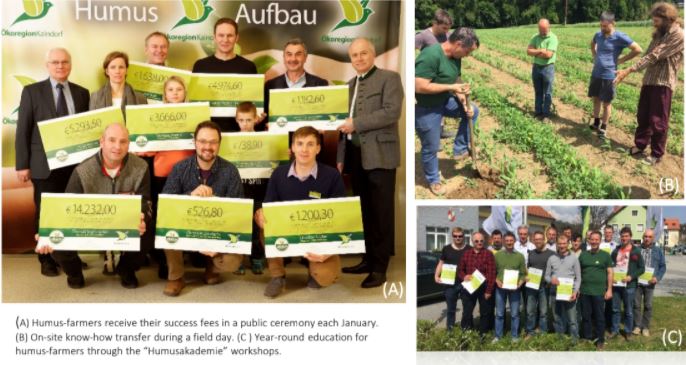
The Humus-Program of the “Ökoregion Kaindorf” is a contract solution developed for voluntary trading of CO2 certificates: Based on an initial soil sampling at the start of the contract (by a certified civil engineer and accredited national laboratory), farmers set own measures to increase the humus content in their soils. After a period of three to seven years (according to the farmers’ needs), humus content is determined again by a second soil sampling. An increase in humus content is converted into additional tons of CO2 stored in soil. Farmers receive a success fee of 30€ per additional ton of CO2 stored, which is financed by companies who voluntarily compensate their unavoidable CO2 emissions. The amount of CO2 purchased by the companies cannot be traded. After the payment, farmers must guarantee that the increased humus content remains in place for at least five years.
This requirement is verified by a third soil sampling taken five years after the payment. Decreases in humus levels lead to partial or complete refunding of the success fee. Contracts and the carbon verification is organized and managed by the association “Verein Ökoregion Kaindorf” while emission trading is managed by an own Ltd.

Objectives

  • Main objective: humus (soil organic matter) accumulation and soil carbon
  • sequestration;
  • Higher soil fertility – soil organic matter supports life in the soil, which is the
  • basis for vital crops and reduces the need for mineral fertilizers and pesticides
  • More reliable harvests through resilient crops – living soil supports resistant
  • plants in the face of global climate change;
  • Keeping the soil in place – humus-rich soils rich are more resistant against erosion by heavy rainfalls, flooding or wind;
  • Humus-rich soils store lots of water, which helps to maintain stable yields
  • during droughts;
  • Keeping the groundwater clean – soils rich in humus can fix more nitrate and
  • prevent groundwater pollution;
  • Climate change mitigation through CO2 fixation – soil organic matter contains about 60% carbon, hence building up the soil humus removes CO2 from the atmosphere and helps to mitigate global overheating

Public Goods

Climate regulation - carbon storage
Climate regulation – carbon storage
Soil quality (and health)
The Humus-Program of the Ökoregion Kaindorf
Rewilding of detention basin in Massa Lombarda

Problem description

The initiator of the contract solution is the association “Ökoregion Kaindorf”. The association, which consists of three municipalities, has set itself the goal of significantly reducing its CO2 emissions to achieve net CO2 neutrality as soon as possible. Human-induced climate change was the reason to act. By reducing the consumption of energy and raw materials and supplying them with renewable energy, as well as by humus formation, the way to CO2 neutrality is sought. The most far-reaching project in the “Ökoregion” is the Humus-Program, in which around 300 farmers throughout Austria are now participating.

How is the European Union dealing with climate change?

How is the European Union dealing with climate change?

Climate change is a global problem, since it affects – with greater or lesser aggressiveness – all regions of the planet, with increased temperatures and increased risk of desertification to higher annual rainfall and flood risks; as we have posted previously.

The European Environment Agency has observed a number of impacts ranging from economic sectors such as tourism and energy; to the environment. For example, loss of biodiversity, forest fires, decreased crop yields, increased demand for water, mortality from heat waves, etc. These impacts in the countries of Western Europe are collected in the following map (Source: European Parliament).

The EU in the face of climate change

Faced with the impacts of climate change, and currently endorsed by the latest IPCC report, the EU has joined the Paris Agreement, the first global agreement to tackle climate change. The EU promised to mitigate climate change and maintain global temperature growth at 1.5°C from pre-industrialized times. It also pledged to reduce greenhouse gas emissions by at least 40 percent below 1990 levels by 2030.

The EU one of the major GHG emitters

We must recognize that due to the model of production and life, the EU is the third largest emitter of greenhouse gases in the world after China and the United States, followed by India, Brazil and Japan (2015).Within the EU, the main emitters (2017) were Germany, the United Kingdom, France, Italy, Poland and Spain. The energy sector accounts for 80.7% of GHG emissions in the European Union, followed by agriculture (8.72%), industry (7.82%) and waste (2.75%; Source: European Parliament).

So it is the EU’s responsibility and obligation to put an immediate remedy in place. To this end, in 2008, the EU set itself the target of reducing emissions by 20% compared to 1990 levels. And in 2015, the EU registered a 22% reduction from 1990 levels.

Furthermore, in 2014, the EU set a new target of reducing emissions by at least 40 % by 2030 from 1990 levels.

And to reduce emissions from power plants and industry, the EU has established the first major carbon market with the Emissions Trading System (ETS), companies have to buy permits to emit carbon dioxide carbon (CO2), so the less they pollute, the less they pay. The scheme covers 45% of the European Union’s total greenhouse gas emissions.

For other sectors, such as buildings or agriculture, reductions will be achieved through agreed national emissions targets, which are calculated on the basis of the countries’ gross domestic product per capita.

On road transport, the European Parliament supported legislation to reduce CO2 emissions by 37.5% for new cars, 31% for vans and 30% for new trucks by 2030.

The EU also wants to use the carbon-absorbing power of forests to fight climate change. The European Parliament approved a regulation in 2017 to prevent emissions from deforestation and land-use change (LULUCF).

In addition, the European Commission is expected to present a proposal later this year on a border adjustment mechanism for carbon emissions, which would encourage companies inside and outside the EU to decarbonize. The aim of this tool is to set an import price for certain products from countries outside the EU that are less ambitious in terms of climate. Its objective is to prevent carbon leakage, which occurs when industries shift production to countries that have less stringent greenhouse gas emission rules.

Building natural flood management knowledge and capacity in Wensleydale

Building natural flood management knowledge and capacity in Wensleydale

Summary

The Wensleydale CSFF network was set up in April 2017 by a group of 29 farmers with a common interest in natural flood management. The group has subsequently grown and members tend to naturally group according to their farming/land management practices, although all have benefited from other similar CSFFs being set up at the same time in thesame geographical area.
The group has several aims including exploring Countryside Stewardship priorities and funding that can help deliver NFM and management for priority habitats and species. By working as a group the farmers are also able to provide sufficient information to help inform and influence future funding allocations such as Agri-Environment Schemes (AES) and the priorities of organisations including Yorkshire Water and the Environment Agency. The group has constant contact with other nearby NFM CSFF groups including Upper Wharfedale, Swaledale and Lunesdale to agree ways of joint working to share expertise and training delivery which increases farmer participation and outcomes. The group also works with the ‘Yorkshire Dales Catchment Partnership’ to improve water quality

Objectives

  • To explore what NFM measures could be considered and installed to help
  • address surface water run-off and high river and stream levels during periods
  • of heavy and/or prolonged rainfall;
  • Identify what services farmers provide/can provide to help downstream
  • communities recognise the value of ‘buying in’ to NFM carried out on
  • farmland upstream;
  • Improved management of ancient and native woodland;
  • Native woodland creation and habitat creation for black grouse and red
  • squirrel;
  • Management of purple moor grass and rush pasture for breeding waders
  • Traditional hay meadow management and restoration;
  • Riparian habitat management and creation.

Public Goods

Landscape and scenery
Resilience to natural hazards
Soil quality (and health)
Rural viability and vitality
(Farmland) biodiversity
Rewilding of detention basin in Massa Lombarda

Problem description

The Wensleydale NFM CSFF group was set up as part of the 2017 Northern Flood Round of the CSFF to tackle issues brought into sharp focus following Storm Desmond in 2015. Surface water run-off, coupled with high river water flows during periods of heavy or prolonged rainfall, was contributing to flooding in the area which was happening more regularly and with increasing intensity. Flooding and high water levels were not just affecting farmland, but local roads and communities too.
An additional driver was the need to improve water quality as phosphate and sediments were reaching the upper and middle reaches of the Ure catchment and the Semer Water SSSI.

New EU forestry strategy for 2030

New EU forestry strategy for 2030

The Union’s forests cover 158 million hectares (5% of the world’s forest area). In total, forests cover 37.7% of the Union’s territory, and the six Member States (Sweden, Finland, Spain, France, Germany and Poland) with the largest wooded forest area cover two thirds of the Union’s forest area.

However, one of the main problems facing forest systems globally is human action. The conversion of forest areas into agricultural or urban areas and indiscriminate logging, among others, have reduced the planet’s forest areas in recent decades. Added to all this is the degradation of these spaces and the lack of maintenance.

And to save them from this situation, the EU has developed a new forestry strategy for the year 2030 based on the biodiversity strategy. The strategy will contribute to achieving the EU’s biodiversity targets, as well as the goal of reducing greenhouse gas emissions of at least 55% by 2030 and climate neutrality by 2050.

Objectives

As we just discussed, the main objective is to improve the quantity and quality of the EU’s forests and to strengthen their protection, restoration and resilience. In addition, forests must be adapted to the new uncertainties that climate change can cause.

Likewise, it is also intended:

  • Promote sustainable forest bioeconomy for long-lasting wood products;
  • Guarantee the sustainable use of wood resources for bioenergy;
  • Promote bioeconomy based on non-timber forests, including ecotourism;
  • Develop skills and empower people for a sustainable forest-based bioeconomy;
  • Protect the last remaining old and primary forests in the EU;
  • Ensure forest restoration and strengthened sustainable forest management for climate adaptation and forest resilience;
  • Reforestation and reforestation of biodiverse forests, including the planting of an additional 3 billion trees by 2030;

Offer financial incentives to forest owners and managers to improve the quantity and quality of EU forests. And to achieve these goals, a strategy will be developed focusing on:

  • Strategic forest monitoring, reporting and data collection;
  • Develop a strong research and innovation agenda to improve our knowledge about forests;
  • Implement an inclusive and coherent EU forest governance framework;
  • intensify implementation and enforcement of the existing EU acquis.

You can receive information like the one you just read by simply signing up for our newsletter.

Program “Flowering meadows” - contracts for protection of biodiversity and water resources by regular mowing of meadows

Program “Flowering meadows” – contracts for protection of biodiversity and water resources by regular mowing of meadows

Summary

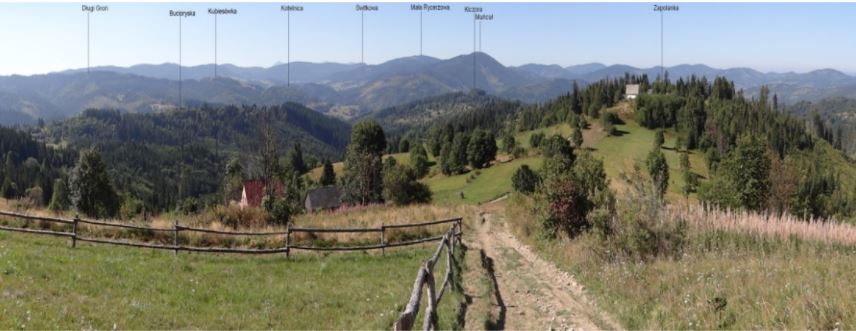
The program “Flowering meadows” has been introduced in 2011 by the Żywiec Zdrój S.A. company (one of the largest producers of bottled water and other soft drinks in Poland) within their Corporate Social Responsibility policy. Under the program, farmers/land owners in the communes of Jeleśnia, Węgierska Górka, Radziechowy-Wieprz regularly mow meadows respecting certain rules in order to protect biodiversity as well as water resources used by the company. Since 2017 the program has been managed by National Foundation of Environmental Protection Centrum UNEP/GRID-Warsaw. Farmers may take an advantage of the compensation of PLN 2.5 thousand/ha (ca. 580 euro/ha) of mowed area. In 2019, the project covered 52 ha of land owned by 97 farmers. The target area planned for protection is 120 ha of sensitive plots surrounding the water springs of Żywiec Zdrój S.A. As a result of this program, overgrowing of valuable grassland habitats was inhibited, and the infiltration of water was improved. The project allowed to secure populations of plant species subject to legal protection, which are highly threatened due to the abandonment of the use of mountain meadows – e.g. it prevented the extinction of the Spisz saffron in Sopotnia Mała in Polana Monarska.

Objectives

  • Preservation, protection and restoration of the biodiversity in valuable natural areas;
  • Protection of clean water resources of the region;
  • Maintenance and improvement of valuable natural habitats.

Public Goods

Landscape and scenery
Water Qualiy
Water Qualiy
(Farmland) biodiversity
Rewilding of detention basin in Massa Lombarda

Problem description

Abandonment of mowing accelerates the processes of secondary plant succession in the meadows by the influx of self-seeding invasive plant species and of trees. As a result, this affects the natural biodiversity of meadows, and reduces the water infiltration of these areas. Many species of valuable plants are being displaced from their natural habitats. Mowing meadows has a positive effect on the preservation of these habitats and improves water retention.